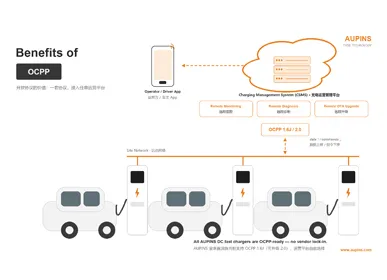
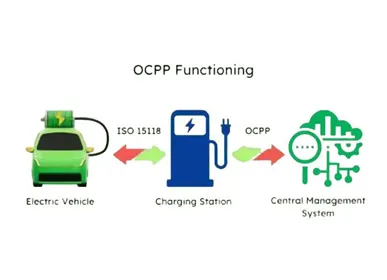
What is OCPP?OCPP is the open language between a charging station and its cloud management platform. If your charger speaks OCPP, it can connect to any OCPP-compatible platform — today's one, or ...
A dual-gun DC charger allows two vehicles to connect to one charging unit, but two connectors do not automatically mean that both vehicles receive the charger's full rated power. For charging netw...
A 360–400 kW EV charging site is designed for high-power charging where vehicle throughput, short dwell times and future demand justify substantial electrical infrastructure. Successful planning requ...
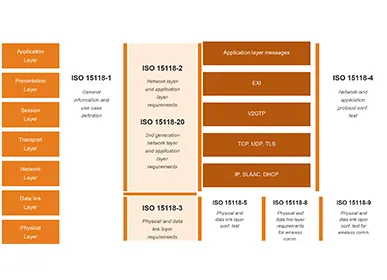
If you work in EV charging, you have seen the number on datasheets, tenders and conference slides: ISO 15118-20.It is usually mentioned in one of three ways — as a compliance requirement, as a featur...
Choosing the right DC charger power for a fleet depot means balancing vehicle availability, daily energy demand, charging windows and electrical infrastructure. A 60 kW unit may suit vehicles parked f...
The question comes up in almost every technical review: "OCPP is the newer, bigger protocol — won't it eventually replace ISO 15118?"It will not, and the reason is simple enough to sett...
Purchasing a DC fast charger is a significant investment for charging station operators, fleet managers, and commercial property developers. However, the initial equipment price represents only one pa...
Choosing a commercial DC fast EV charger requires more than comparing rated power outputs. Voltage range, maximum current, conversion efficiency, power factor, protection ratings, and electrical safet...
ISO 15118 conformance testing has a reputation for being brutal. In practice, most failures do not come from misunderstanding the protocol. They come from six implementation details that only surface ...


 English
 Deutsch
 Español
 italiano
 русский
 português
 Svenska
 العربية
 Nederland
 norsk
 français