Megawatt-class charging systems (MCS) are revolutionizing the way battery-electric commercial vehicles are used. Thanks to MCS technology, electric trucks can now be fully charged within the legally mandated 45-minute driving break, gaining an additional 4.5 hours of range. With the official release of the IEC TS 63379 technical specification in 2026 and the official integration of MCS services into ISO 15118-20 Amendment 1, megawatt-class charging has moved from proof-of-concept to large-scale commercialization.
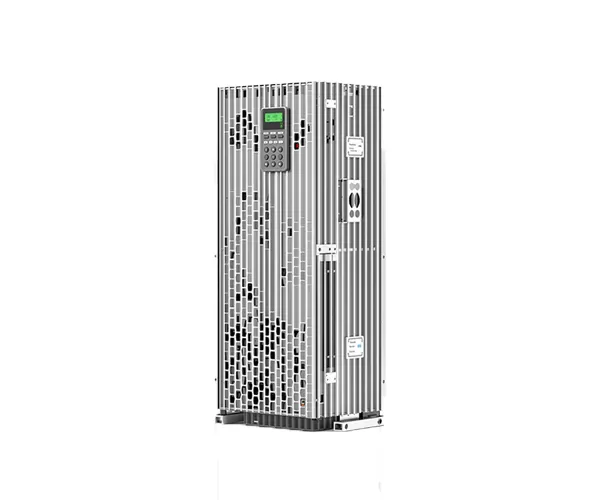
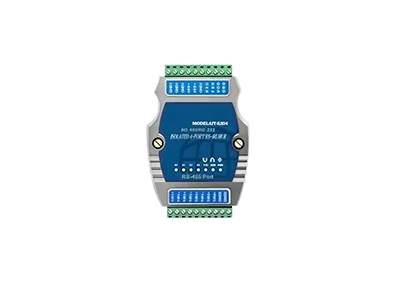
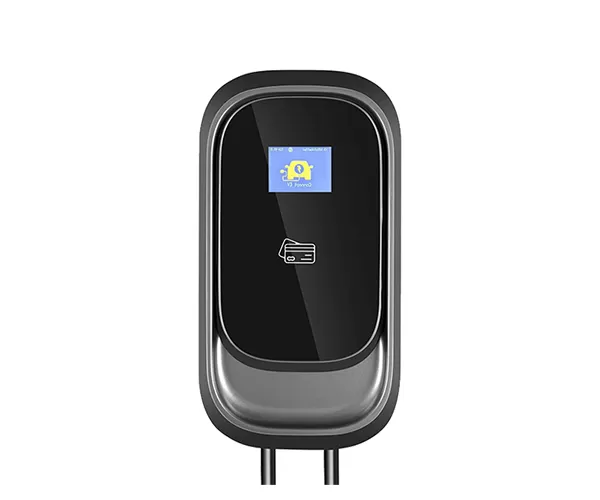
Against this backdrop, our company has independently developed and launched the European standard megawatt charging pile MCS system SECC/EVCC product that complies with the CharIN MCS 2.0 specification. With cutting-edge technology, we are reconstructing the charging experience for commercial vehicles and providing efficient, safe and intelligent core charging components for large commercial vehicles such as electric trucks and buses, thus helping to accelerate the global transformation towards electrification of commercial vehicles.
1. 10Base-T1S Ethernet Physical Layer: The Cornerstone of Stable and Reliable Communication
This product uses industry-leading 10Base-T1S (IEEE 802.3) single-pair Ethernet as the physical communication link. ISO 15118-10:2025 was the first standard to introduce 10Base-T1S single-pair Ethernet into the communication architecture between electric vehicles and charging stations. Compared to the power line communication (PLC) relied upon by traditional charging systems, 10Base-T1S Ethernet communication offers three core advantages:
Superior anti-interference capability: Utilizing a differential signal transmission design, it effectively resists strong electromagnetic interference (EMI) in megawatt-level charging scenarios. Even when operating at a high current of 3000A, data transmission remains stable, preventing charging failures due to communication interruptions. Single-pair Ethernet communication employs dedicated balanced differential twisted-pair cables, offering particularly significant advantages in extreme environments with high voltage and high current.
Higher communication speed and stability: The introduction of SPE (Single-Pair Ethernet) not only improves communication speed and stability, but also makes it more suitable for emerging application scenarios such as electric heavy trucks, electric ships, and industrial-grade new energy equipment. Industry giants MAN and ABB have completed MCS charging tests based on Ethernet communication, verifying the long-term stability of the system under conditions exceeding 700V and 1000A.
Native support for TCP/IP and IPv6: Perfectly adapted to modern network architecture, providing high-speed data channels for intelligent applications such as fleet management and remote monitoring, and enabling flexible expansion without the need for additional middleware.
2. Dedicated ISO 15118-20 protocol: Dual protection of security and intelligence.
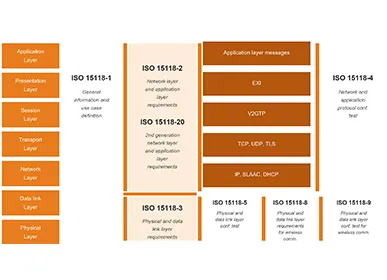
The product strictly adheres to CharIN's recommended standards and is based on the pure ISO 15118-20 protocol. ISO 15118-20 Amendment 1 was officially released in July 2026, introducing dedicated communication procedures and requirements for MCS, while further strengthening the protocol's security architecture.
Security encryption upgrade: Built-in TLS 1.3 encryption mechanism ensures the secure transmission of sensitive data such as identity authentication and payment information during charging, preventing information leakage and malicious attacks.
Versatile for diverse commercial applications: Natively supports plug & charge, fleet charging management, and vehicle-to-grid (V2G) power interaction. Scania successfully demonstrated the world's first V2G application in heavy-duty commercial vehicles in June 2026, proving the enormous potential of MCS in bidirectional energy interaction.
Seamless Compatibility and Future Expansion: As the most comprehensive charging protocol currently available, ISO 15118-20 eliminates the ambiguity and limitations of older versions, ensuring full compatibility with European standard MCS vehicles and charging stations, while reserving room for future technology upgrades. As a unified cross-manufacturer standard, MCS ensures that any compliant MCS truck can be charged at any MCS charging point.
Long-haul truck fleets: Rapidly replenishing range via high-power charging during mandatory driver breaks. In September 2025, Germany's first public megawatt-level charging station on the A2 highway officially went into operation, with a charging capacity of 1.2MW. In this test, the MAN eTruck achieved a charge from 2% to 90% in just 36 minutes (approximately 740kW) – precisely the operational efficiency required by long-haul truck fleets.
Urban buses and sanitation vehicles: Adapted to the centralized charging needs of bus hubs, supporting V2G functionality, and assisting in peak shaving and valley filling of the power grid. MCS technology is also applicable to scheduled bus services.
Port and mining vehicles: Resistant to extreme environments, high-reliability design ensures stable charging for heavy-duty electric vehicles. In mining areas, transport trucks account for 30% to 80% of energy consumption; CharIN has launched the R-MCS designed specifically for extreme conditions and the X-MCS for the largest and heaviest machinery. In ports, Milence has deployed MCS charging facilities at the Port of Antwerp-Bruges, with a charging capacity of 2.8MW.
Ship shore power: The CharIN Maritime Working Group is defining MCS-compatible shore power connection specifications based on 10Base-T1S Ethernet technology, and megawatt-level charging is extending from land to sea.
With the successive releases of IEC TS 63379:2026 technical specification, ISO 15118-20 Amendment 1, and ISO 15118-10:2025, the global standard system for megawatt-level charging has become increasingly complete. Our SECC/EVCC products, based on 10Base-T1S Ethernet as the physical layer and ISO 15118-20 as the core communication protocol, precisely position themselves at the high ground of MCS 2.0 technology, providing a solid and reliable "Chinese chip" for the global electrification transformation of commercial vehicles.



 English
 Deutsch
 Español
 italiano
 русский
 português
 Svenska
 العربية
 Nederland
 norsk
norsk français