When you park your car in the office building's basement, plug in the charger, and go upstairs for a meeting—your car isn't idle during that time. It might be "making money" or "saving electricity," depending on whether you've enabled V2B (Vehicle-to-Building) technology.
This isn't science fiction; it's a reality already implemented globally by companies like Hitachi, Nissan, and Wallbox. Simply put, V2B allows your electric vehicle to charge during off-peak electricity rates and then supply electricity to the entire building during peak hours. It doesn't deplete your range safety margin, yet it significantly reduces the building's electricity bill.
Traditional charging is unidirectional: grid → vehicle.
V2B is bidirectional: power grid ⇌ vehicle ⇌ building.
The core consists of two parts:
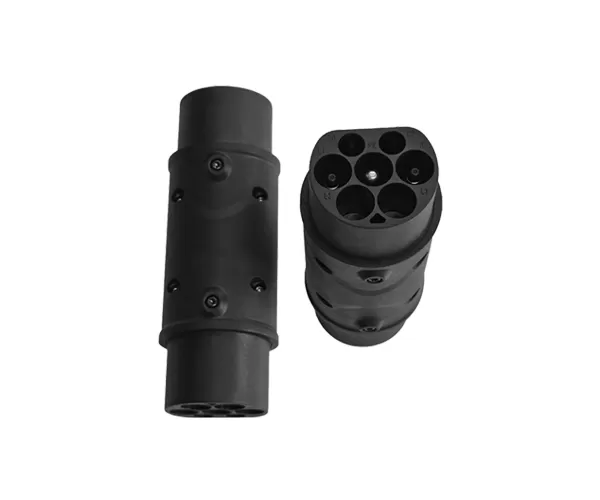
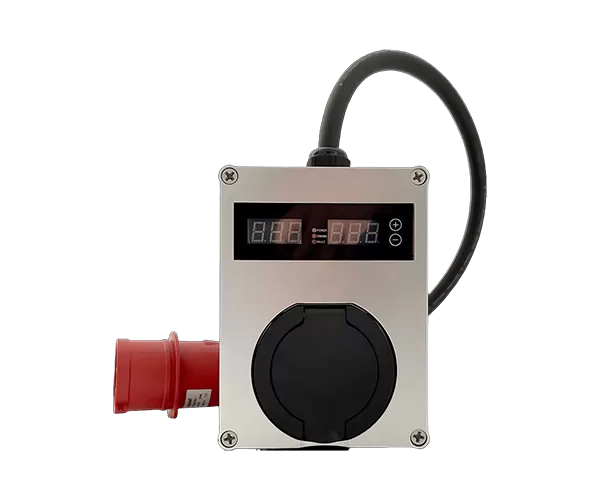
A two-way charging station (hardware) that can convert the battery's DC power into AC power for building use;
Intelligent energy management system (software) monitors electricity prices, building power load, vehicle remaining battery power, and your off-get off work time in real time, automatically deciding when to charge and when to discharge.
The key is that the system sets a "safe range baseline" (for example, ensuring you have at least 80 kilometers of range to get home), and this baseline automatically increases as you approach your end of the workday. So you never have to worry about running out of electric charging battery halfway through your meeting.
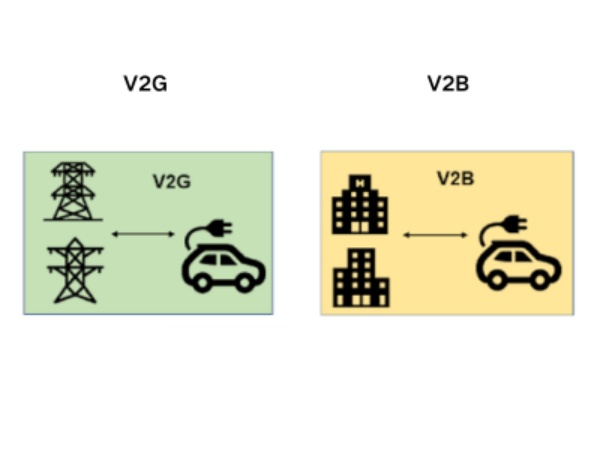
Many people confuse V2B (vehicle-to-business) with V2G (vehicle-to-grid). The essential difference between the two is:
V2G (Vehicle-to-Grid) | V2B (Vehicle-to-Construction) | |
Where does the energy go? | Sold to the power grid company | For internal use only |
Revenue generation methods | Market electricity sales revenue | Reduce expenditure on purchased electricity |
Transaction threshold | Requires electricity market qualifications; metering is complex. | No intermediaries, internal settlement |
Control | Subject to power grid dispatch instructions | Completely autonomous and controllable |
V2B is essentially providing a building with a "zero-land-use, zero-initial-investment" energy storage system for free. It does not rely on electricity price subsidies, does not participate in complex electricity trading, and has extremely low compliance costs. For self-owned office buildings, parks, or apartments, this is the most "lightweight" energy optimization path.
Electricity bills for commercial buildings consist of two parts: "electricity consumption charge" and "electricity demand charge." Running an extra air conditioner during peak hours can increase the monthly "maximum demand" charge.
V2B actively discharges electricity during peak midday electricity prices, replacing part of the grid power, essentially helping buildings "smooth out" peak electricity consumption. This alone can save 5% to 15% on monthly electricity bills.
Logistics trucks and employee shuttle buses spend a significant amount of time parked on the site during the day. By utilizing these periods to discharge electricity, each vehicle can generate arbitrage revenue of 15-20 yuan per day. Over a year, this is enough to cover the purchase cost of bidirectional charging stations, after which it becomes pure profit. The fleet is no longer a cost center but has become a dispatchable energy asset.
V2B discharge replaces peak-hour thermal power (which has high carbon emission intensity). Each 1 kWh replaced reduces approximately 0.6 kg CO₂. At the same time, by shifting peak loads to off-peak conditions, buildings are more likely to obtain "demand response" scores in green certifications such as LEED and BREEAM, and there is no need to install fixed battery packs, avoiding the hassles of battery land occupation and fire safety approvals.
Nissan's Fukushima plant: 20 LEAF vehicles were used to supplement the production line with electricity when solar power was insufficient at midday, reducing peak power consumption by 12% and serving as emergency power sources.
Wallbox office tower in Madrid: 15 electric vehicles are linked to the building's system, resulting in a 19% decrease in measured electricity costs in 2024.
Brooklyn, New York apartment building: Fermata Energy deployed V2B for 120 apartments, prioritizing lighting and elevators in common areas, with residents offsetting their property fees by the amount of electricity they generate.
These cases demonstrate that V2B is not a distant vision, but a replicable business solution for today.
Every new technology faces real-world obstacles, and V2B is no exception:
Battery degradation: Increasing the frequency of discharge will accelerate the depletion of cycle life. However, with modern batteries (LFP/NMC), the additional degradation can be controlled to 2~3%/year when shallow charging and discharging, and the vehicle warranty usually covers this scenario.
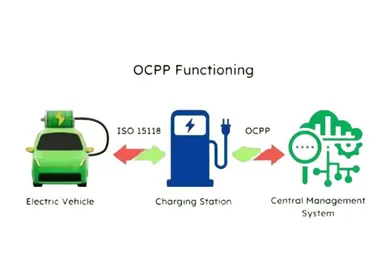
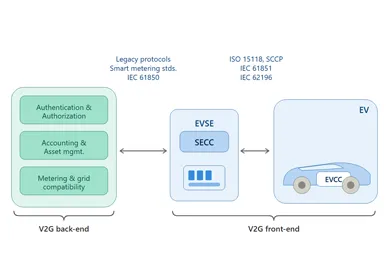
Interface standards are not uniform: CHAdeMO supported bidirectional communication earlier, but the CCS standard (ISO 15118-20) is becoming more widespread, and new cars are expected to be fully compatible after 2026.
Insurance liability division: Liability for malfunctions during discharge is unclear. Currently, some insurance companies have launched "V2X supplementary insurance," which jointly insures the vehicle and the charging equipment.
User behavior fluctuations: Sudden travel may disrupt scheduling. However, reinforcement learning algorithms can reduce prediction errors to within 5%, and the system will issue early warnings and reserve sufficient battery power.
China: Beijing, Shenzhen and other places provide a subsidy of 300-600 yuan/kW for reverse discharge at the pile end, and incorporate V2B into the virtual power plant aggregated resources.
EU: New commercial buildings must be equipped with bidirectional charging and discharging interfaces starting in 2026.
California, USA: V2B discharges can be counted towards the self-generating incentive program, receiving an additional subsidy of $0.15/kWh.
In the next step, V2B will be integrated with photovoltaics and building energy storage to form a "photovoltaic-storage-charging-discharging" microgrid, maximizing the self-consumption of new energy. When the vehicle's power battery is retired, it can also be used in a tiered manner for building fixed energy storage, making the most of every kilowatt-hour of electricity.
Your electric car quietly charges and discharges in the parking lot. Behind this is not a one-way consumption, but the fusion of data and energy collaboration between the transportation and building sectors. V2B does not attempt to disrupt the power grid; it simply transforms "parking time" into "valuable time" in the most effortless way. And the only requirement the car has for all of this is a bidirectional charging interface—but around this interface, a completely new building energy ecosystem is growing.
 English
 Deutsch
 Español
 italiano
 русский
 português
 Svenska
 العربية
 Nederland
 norsk
norsk français