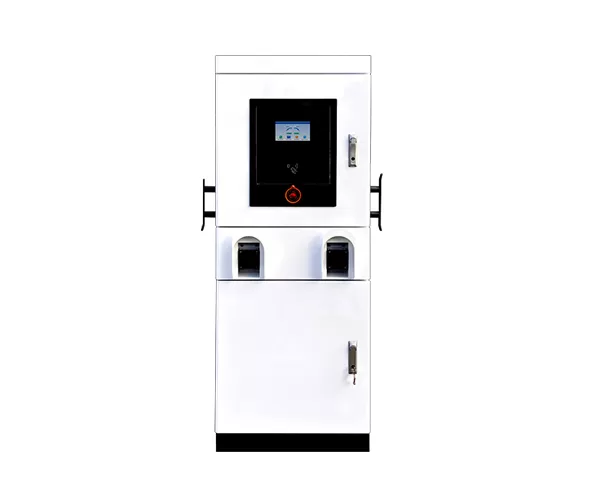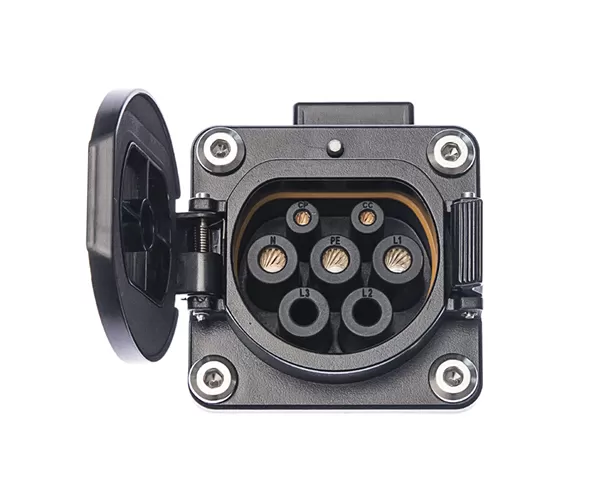
“This charger clearly says 300 kW, so why is my car only charging at 80 kW?”
“It started at 120 kW—why did it drop to 60 kW after a few minutes?”
“Is the charger broken?”
If you drive an EV, you’ve probably run into this. Especially if you’re new to electric cars, the first reaction to seeing a charging power far below the charger’s rated output is often: something must be wrong with this charger.
But the truth is usually different. In most cases, the charger is not broken, and neither is the car. The entire charging system is simply working according to its own logic. The “150 kW,” “250 kW,” or “350 kW” printed on the charger housing is not a promise that you will get that much power the whole time. It is the maximum the charger can provide under ideal conditions. Actual charging power is the result of a real-time negotiation between the vehicle, the battery, the BMS, the charger, and the grid.
Today, let’s break down the question: Why do chargers sometimes slow down? What are the 7 reasons EV drivers most often overlook?
Many people treat charger power like engine power. They think that if it says 300 kW, the car should charge at 300 kW from start to finish. That is not how it works.
The charger is only the “supply side.” The real decision-maker is the vehicle. How much power the battery can accept depends on its current temperature, state of charge, voltage platform, and how the BMS judges the situation. A thicker water pipe does not mean more water will flow if the tap is not opened wider.
So when charging power drops, don’t immediately blame the charger. Look at the car first, then the temperature, then the state of charge, and finally the charging station.
This is the most fundamental and most common reason.
An EV battery does not charge at one fixed power level from 0% to 100%. DC fast charging has its own “charging curve.” When the battery is at a low state of charge, it can accept a higher current, so power is often high. As the battery fills up—especially after 60% or 70%—the BMS actively limits power.
Why? Because at a high state of charge, battery voltage rises. Continuing to charge at very high power can cause overheating, lithium plating, and even damage to the cells. To protect battery life and safety, the vehicle must reduce power.
That is why you often see this: 10% to 50% is fast, 50% to 80% is okay, and 80% to 100% is very slow. This is not a fault. It is normal behavior for lithium-ion batteries. This is also why many manufacturers’ 10%–80% charging times are far more useful than 0%–100% figures.
Winter is a high season for slow EV charging.
You arrive at a charging station in a car that supports 250 kW fast charging, plug in, and see only 30 kW, 50 kW, or 70 kW. It is not necessarily the charger’s fault. The battery is simply too cold. At low temperatures, lithium-ion battery activity drops, and high-power charging becomes risky. So the BMS limits power.
The solution is not complicated: if the vehicle supports it, set the charging station as your navigation destination before driving there and start battery preconditioning. Many modern EVs have this function. The car will heat the battery to the right temperature while you drive, so you can charge faster when you arrive.
If you drive straight to a fast charger with a cold battery—especially after the car has been parked for hours—slow charging is not surprising.
Cold is a problem, and so is heat.
After a hot summer day, a long high-speed trip, several fast-charging sessions in a row, or aggressive driving, the battery temperature may already be high. In this case, the BMS will also reduce charging power to prevent the system from overheating. Two identical cars parked next to two identical chargers can charge at completely different speeds. One has just been driven gently. The other has just finished hundreds of kilometers of highway driving. Their battery conditions are not the same.
So slow charging does not necessarily mean something is wrong with the car. The vehicle may simply be protecting itself.
The charger provides capability. The vehicle decides how much to accept.
A car that can accept a maximum of 100 kW will not suddenly charge at 200 kW just because it is plugged into a 350 kW charger. Conversely, a car rated for 250 kW will not always reach 250 kW under every condition. Battery aging, current SOC, battery temperature, voltage platform, and manufacturer strategy all affect actual power.
This is also why looking only at “maximum charging power” can be misleading. The number on the spec sheet looks impressive, but what really affects your travel time is the charging curve, not a momentary peak.
Some charging stations do not provide full power to every stall independently. When multiple vehicles charge at the same time, the system may share or dynamically distribute the total available power.
You may be charging at 140 kW, and then another car pulls up next to you. Suddenly your power drops to 70 kW. The charger is not broken. The power is being shared. Tesla V2 Superchargers once used a design where adjacent stalls shared power, and some CCS fast-charging stations also distribute power dynamically based on vehicle demand.
So if you notice your charging power drops as soon as another car arrives, it is probably not a coincidence.
A charger is not a magic box. Inside, there are power modules, converters, cooling systems, cables, and supply equipment. High temperatures, module faults, insufficient cable cooling, and grid capacity limits can all affect output power.
This is especially true in hot summers: the charger itself gets hot. High power means high load, and the infrastructure must manage power dynamically to avoid overload. When operators build high-power charging stations, buying a few “300 kW” units is not enough. They also need matching power supply, distribution, protection devices, and energy management systems.
We have talked a lot about “it’s not a fault,” but we cannot deny that sometimes the problem really is the charger or the infrastructure.
If the same car can fast-charge normally at other stations but is consistently slow at one particular station, then that station should be suspected. It could be a communication problem, a power module issue, a cable problem, a cooling problem, or a power quality or wiring issue.
The simplest way to judge: move to another stall, or try another charging station. If the problem only happens in one place, it is probably the infrastructure. If it is slow everywhere, it is more likely a limitation of the vehicle itself.
Imagine this: you drive an EV that supports high-power fast charging and arrive at a 350 kW charging station with only 12% battery left. At first, charging power is high, and you are pleased. But after ten minutes or so, SOC rises, and power starts to drop. By 60%, it is lower. After 80%, it is even lower.
At this point, you may think: “Why is the charger slowing down? Is it broken?”
In fact, this is a normal charging curve. Replacing a 150 kW charger with a 350 kW charger does not shorten charging time proportionally. The vehicle is not a simple appliance that continuously draws maximum power. Charging is a dynamic process.
The EV industry loves to advertise maximum charging power: 250 kW, 300 kW, 350 kW. But what really affects your journey time is this: How long does it take to charge from 10% to 80%? What is the average power? How long can high power be maintained?
Two cars may both claim 200 kW. One can maintain high power for a long time. The other peaks for a few seconds and then drops. The real-world experience is completely different. So looking at the charging curve is more meaningful than looking at maximum kW.
1. Do not charge to 90%–100% unless you really need it. A high SOC means lower charging power.
2. In winter, use vehicle navigation to precondition the battery, especially before arriving at a fast charger.
3. Know your car’s real charging curve. Do not trust only the spec sheet.
4. If one charger is unusually slow, try another stall or another station to determine whether the problem is the car or the charger.
5. Look at average power over the whole session, not the highest number that appears on the screen for a few dozen seconds.
Slow charging is usually not a fault. It is a protection mechanism at work. Battery temperature, current state of charge, BMS strategy, charging station power sharing, and infrastructure capability—if any part of the chain says “slow down,” power will drop.
What truly deserves attention is this: under similar conditions, if the car is consistently abnormally slow at different charging stations, then it is time to check the vehicle or the infrastructure.
So next time you see 70 kW on the screen instead of the expected 200 kW, do not immediately assume the charger is broken. Check the state of charge, check the temperature, and check whether another car is charging nearby. The key to fast charging is not 350 kW the whole time. It is how much power the vehicle can safely and efficiently accept at that moment.


 English
 Deutsch
 Español
 italiano
 русский
 português
 Svenska
 العربية
 Nederland
 norsk
norsk français