A 40 kW DC charger can be a practical option for commercial sites where drivers need a meaningful charge during a scheduled stop, but do not require the fastest possible turnaround. The right choice depends on how long vehicles stay, how much energy they need, how many vehicles arrive together and how much electrical capacity the site can supply. Before specifying equipment, assess actual charging demand rather than relying on rated power alone.
A 40 kW DC charger is a direct-current charging unit with a rated output of up to 40 kilowatts, subject to vehicle acceptance, battery conditions and equipment limits. In ideal conditions, it can deliver approximately 20 kWh in 30 minutes or 40 kWh in one hour.
Actual energy delivered may be lower because charging power varies with battery state of charge, temperature, vehicle limits and conversion losses. For example, a vehicle accepting only 30 kW cannot use the charger's full 40 kW output. Battery charging curves may also reduce power as the battery fills.
Use this simple estimate to screen a site: Energy delivered (kWh) ≈ average charging power (kW) × charging time (hours). If a vehicle needs 30 kWh and averages 30 kW during the session, charging takes about one hour, before allowing for connection, payment and departure time.

Dwell time is the period a vehicle remains parked at a site, while turnover describes how many vehicles use the charging point during an operating period. A 40 kW DC charger is generally more suitable when vehicles remain on-site long enough to receive the required energy without creating queues.
| Commercial use case | Typical dwell pattern | 40 kW DC charger fit |
|---|---|---|
| Workplace parking | Several hours | Often suitable where vehicles need partial charging |
| Hotel or destination parking | One to several hours | May suit overnight or longer visits, depending on demand |
| Retail or service stop | Around 30–90 minutes | Depends on energy required per visit |
| Fleet depot with scheduled breaks | Predictable stop windows | Suitable if vehicle energy needs fit the schedule |
| Highway-style rapid turnover | Short stops and high demand | May be insufficient for drivers expecting very fast charging |
These are planning categories, not guaranteed charging outcomes. Model the busiest periods as well as average daily usage. If several vehicles arrive together, one 40 kW unit may become a bottleneck even when daily energy demand appears modest.
The International Energy Agency’s Global EV Data Explorer provides global data on EV adoption and charging infrastructure. Use local traffic, fleet and parking data alongside broader market trends when estimating demand.
Electrical capacity is the site's ability to supply the charger alongside existing building loads without exceeding equipment or utility limits. A 40 kW output rating does not mean the entire installation draws exactly 40 kW from the grid at all times; input demand also depends on efficiency, auxiliary loads and operating conditions.
Before installation, confirm the available service capacity, voltage, phase configuration, protection, cabling, earthing, network connectivity and applicable local codes with qualified electrical professionals. Consider whether load management can prevent charging from coinciding with building peaks. NREL's EVI-X charging infrastructure planning tools support evaluation of charging power, grid impacts and site design.
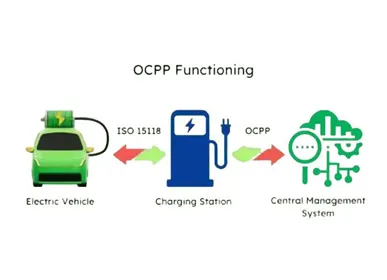
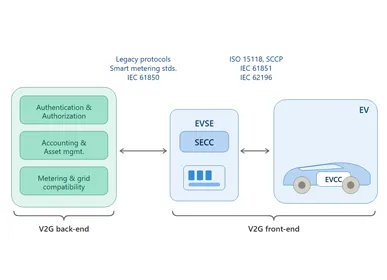
Also review payment and access methods, remote monitoring, maintenance response, connector compatibility and expected uptime. Communication and interoperability requirements matter too; the ISO 15118-20 standard describes communication between electric vehicles and charging equipment, including requirements for power-transfer functions. Confirm which standards and features are relevant to the intended market and charger configuration.
For sites planning multiple units or future expansion, compare a standalone 40 kW charger with a scalable system. A higher-power option may be appropriate where demand is concentrated into short windows; Aupins also offers an ultra fast charging station for electric vehicles for projects with substantially different power requirements. For workplace applications, review the workplace EV charging solution and compare it with the site's usage profile.
A 40 kW DC charger is enough when it can deliver the energy drivers need within their available parking time, meet peak demand and operate within the site's electrical limits. Before requesting a quotation, answer these questions:
How many vehicles charge per day, and how many arrive during the busiest hour?
What is the typical energy requirement per visit?
How long can vehicles remain connected?
Can the site's electrical supply support the charger and other loads?
Is demand expected to grow over the next three to five years?
If sessions are long and demand is predictable, 40 kW may balance charging performance and infrastructure requirements. If drivers need large energy replenishment in short visits, compare higher-power equipment or multiple charging points. Aupins can help commercial buyers evaluate charger options against site requirements, vehicle compatibility and expansion plans.
A 40 kW DC charger should be selected according to energy demand, dwell time, peak vehicle turnover and available electrical capacity—not rated power alone. Calculate the energy needed per session, test the busiest operating periods and confirm installation requirements before choosing equipment. This approach helps commercial operators avoid both undersized charging capacity and unnecessary investment in power their site may not use.
At a constant 40 kW, it would deliver about 20 kWh. Real output may be lower because of vehicle limits and charging conditions.
It can be, especially when vehicles remain parked for an extended period and require partial charging. Confirm demand and dwell time first.
No. Vehicle compatibility and the car's maximum DC charging rate determine how much power it can accept.
There is no universal number. It depends on energy required per vehicle, session length, operating hours and peak-time queues.
The site must support the charger's input demand and installation requirements, which should be verified from the equipment specifications by a qualified electrical professional.
Consider higher power when vehicles have short dwell times, require large amounts of energy per stop or create queues during peak periods.
 English
 Deutsch
 Español
 italiano
 русский
 português
 Svenska
 العربية
 Nederland
 norsk
 français