If you're considering buying an electric vehicle, one of the first questions you need to understand is: what exactly is electric vehicle charging and how does it work? Unlike traditional gasoline cars, which can be refueled in just a few minutes, electric vehicles have a variety of charging methods—some take hours, while others can get you back on the road in just a few minutes .
This article will systematically outline the core knowledge of electric vehicle charging: from working principles to charging types, from charging time to influencing factors, helping you truly understand this "new refueling technique".
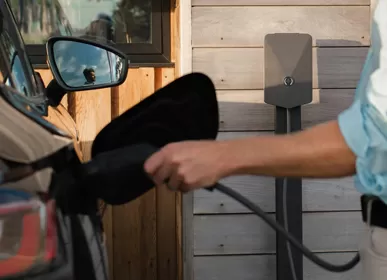
The essence of electric vehicle charging is to transfer electrical energy from the power grid to the vehicle's battery for storage . This process seems simple—plug in the charging gun, and current flows into the battery through the cable—but there is a crucial step behind it: current conversion.
Most charging stations output alternating current (AC), while electric vehicle batteries can only store direct current (DC) . So who acts as the "translator"? The answer is the on-board charger (OBC). It automatically converts AC to DC , ensuring the battery can store energy efficiently and safely . The entire process is fully automated; you simply plug in the charging gun, and the vehicle handles the rest.
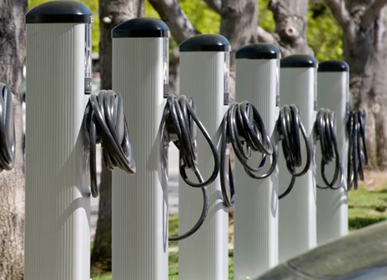
As for the charging stations themselves, after drawing power from the grid, they regulate the voltage and current before safely transferring the energy to the vehicles . More and more charging stations also support smart charging, dynamically optimizing power allocation based on grid load and energy supply and demand.
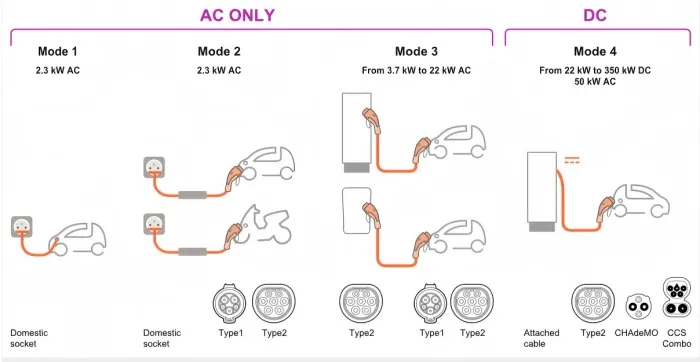
Not all charging methods are created equal. Currently, mainstream electric vehicle charging can be divided into four levels, with speed and power increasing progressively .
This is the charging method that comes with every electric vehicle, with a power output of approximately 2-3kW, adding only about 10 kilometers of range per hour . Its biggest advantage is that it's plug-and-play, requiring no special installation; a regular household outlet will suffice . If your daily commute is short, you can plug it in when you get home at night, and it will be fully charged by the next morning .
Level 2 charging power can reach 7-11kW or even higher, increasing range by more than 50 kilometers per hour . This is what we commonly call a "wall-mounted charging box"—it can be found in home garages, shopping mall parking lots, hotels, and office buildings . Installing a Level 2 charging station usually requires a professional electrician to modify the wiring, but once in place, it becomes the most reliable and everyday charging solution .
Level 3 uses DC fast charging technology. Unlike Level 1 and Level 2, which rely on onboard chargers to convert AC to DC, DC fast charging directly delivers DC power to the battery, significantly reducing charging time . Power ranges from 40kW to 300kW or even higher, adding 200-300 kilometers of range in just 20-30 minutes . This is why DC fast charging stations are increasingly being installed at highway service areas, gas stations, and other long-distance travel points .
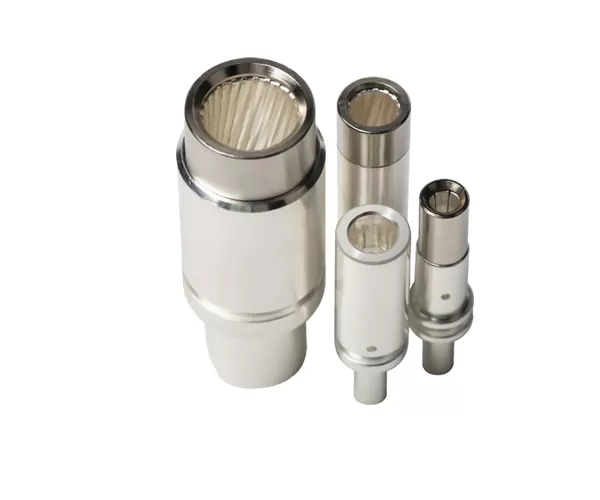
This is a rapidly developing charging architecture in recent years. Through a shared power pool composed of charging modules, the EV charging system can dynamically allocate power and is equipped with various types of charging terminals, supporting the charging needs of all vehicle models from 50V to 1000V . The power pool capacity can be expanded from 240kW and 480kW to 720kW, 960kW, and even above 1440kW . Under this super-fast charging, a vehicle can be charged from nearly empty to 80% in just 10-30 minutes . Meanwhile, the application of a liquid cooling system ensures a device lifespan of over 10 years, an annual module failure rate of less than 0.5%, and operating noise levels below 50 decibels .
Charging time is affected by a variety of factors; the following is a general reference:
Charging level | Power range | Increased battery life | Reference time for 80% battery level |
Level 1 | 2-3 kW | ~10 km/h | 8-20+ hours |
Level 2 | 7-11+ kW | 50-130+ km/h | 4-10 hours |
Integrated DC fast charging | 40-300+ kW | 200-300 km / 20-30 minutes | 20-40 minutes |
Split-type DC fast charger | 240-1440+ kW | Extremely fast | 10-30 minutes |
Specifically: a small electric vehicle with a 30kWh power supply takes approximately 8-12 hours to charge to 80% using a Level 1 charger; under the same conditions, a large electric vehicle with a 60-70kWh power supply may require 15-20 hours or more . If using a Level 2 7kW home charging station, a mid-sized car with a 40-50kWh power supply takes about 4-5 hours to charge to 80%, and about 6-8 hours to fully charge . With DC fast charging, the time can be reduced to less than half an hour .
Even if you find a high-power charging station, the actual charging speed may not reach the theoretical maximum.
The following three factors are equally important:
Battery capacity : The larger the battery, the longer the charging time. Under the same charging station, a 70kWh battery will naturally take longer to charge than a 30kWh battery .
Maximum charging rate : Every electric vehicle has its own "acceptable limit". If your car can only accept 50kW DC charging, then even if you plug it into a 150kW super-fast charging station, the actual charging power will not exceed 50kW . Similarly, an electric vehicle with a 7kW onboard charger will still only charge at 7kW when plugged into an 11kW AC charging station .
Battery temperature: Batteries operate most efficiently at moderate temperatures of 20-25°C . When temperatures are too high or too low, the Battery Management System (BMS) automatically reduces the charging speed to protect the battery . This is one reason why charging is often slower in winter than in summer.
Understanding the principles and classifications of electric vehicle charging can help you plan your daily charging more effectively . If your daily commute is short, a Level 1 household outlet is sufficient; if you use your car frequently, installing a Level 2 home charging station will greatly improve convenience; and if you often travel long distances, planning ahead for DC fast charging networks along your routes is crucial .
With the continuous expansion of charging infrastructure and the constant advancement of technology, charging at home, topping up in the office, and fast charging at highway service areas are becoming increasingly common and reliable . The charging experience for electric vehicles is rapidly evolving towards being faster, smarter, and greener.
 English
 Deutsch
 Español
 italiano
 русский
 português
 Svenska
 العربية
 Nederland
 norsk
norsk français