When electric vehicles are no longer just "electricity consumption terminals" but become mobile energy storage units for the grid, V2G (Vehicle-to-Grid) is pushing charging stations to the forefront of energy interconnection. For the main control board of the charging station, this means a systematic upgrade from "one-way charging control" to "two-way energy management". More intelligent, faster, and safer control strategies are becoming the core competitiveness of V2G charging equipment.
Traditional charging stations only transfer electricity from the grid to the battery. However, V2G requires that the electricity can also be returned from the battery to the grid in the opposite direction. The main control board must first have the ability to perform two-way power conversion control, and be able to send instructions to the two-way AC-DC module or two-way DC-DC module to control them to operate in the rectification state (charging) or inverter state (discharging).
In the V2G scenario, the main control board needs to receive the target charging and discharging power instructions from the grid dispatching platform or the local energy management system, and quickly calculate the required current reference value. The voltage of the vehicle battery will continuously change during the discharging process, and the main control board can use a PID control algorithm with feed forward compensation to adjust the PWM signal in real time, so that the actual power quickly follows the target value.
The important safety mechanism introduced by V2G is battery state protection. Before discharging, the main control board must obtain the lowest single cell voltage and the lowest temperature provided by the BMS. If the battery charge is close to the limit or the temperature is too low, discharging should be prohibited or the discharging power should be limited. The main control board also needs to set the SOC working range, for example, allowing V2G operations within the range of 20% to 90%.
The requirements for response speed in the power market are driving the upgrade of the communication protocol of the main control board. The traditional CAN communication cycle is in the order of 100 ms, but in the V2G scenario, the frequency of receiving grid dispatching instructions may need to reach the order of seconds or even milliseconds.
Frequent charging and discharging will accelerate the aging of key components. The main control board needs to record the cumulative energy and the number of switch operations for each V2G cycle to be used for predicting the electrical lifespan of relays or contactors. In addition, the main control board should have an is landing detection function, stopping discharging within a specified time when the grid is disconnected.
As V2G is an important component of the future intelligent grid, it is promoting the control strategy of the main control board of the charging station towards more intelligent, faster, and safer. From two-way power conversion, feed forward compensation PID, to BMS safety negotiation, high-speed real-time communication, lifespan prediction, and is landing detection, each innovation points to the same goal: making the energy flow between electric vehicles and the grid more efficient and reliable.
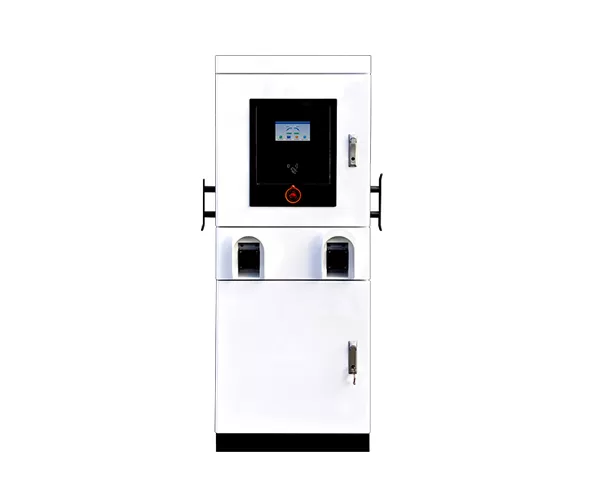
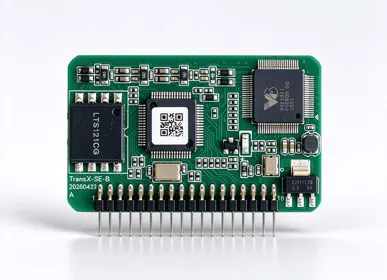
AUPINS takes the main control board of the charging station as its core flagship product, covering one-charger-two-chargers, one-charger-four-chargers, charging pile PDU, and other application scenarios, and forming a complete product matrix around V2G communication, two-way charging protocol, power module, and other key links. For charging station manufacturers and operators, mastering the design method of V2G control strategy and choosing main control boards and module products with two-way communication, high reliability, and remote operation capabilities will be an important step in seizing the key entrance of the intelligent grid in the V2G era.

 English
 Deutsch
 Español
 italiano
 русский
 português
 Svenska
 العربية
 Nederland
 norsk
 français