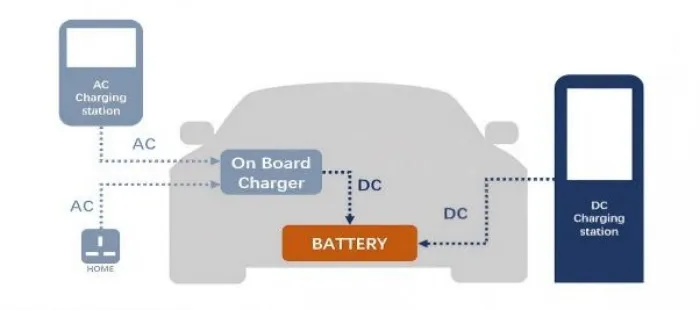
As electric vehicle battery capacity enters the "100kWh+" era, traditional AC slow charging is increasingly inadequate. The rise of low-power DC charging piles is not a simple replacement, but a systemic upgrade centered around efficiency, architecture, and the energy ecosystem.
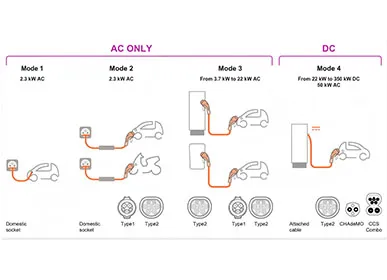
Eliminating the bottleneck of on-board power: Traditional AC charging piles rely on the on-board charger (OBC) in the vehicle to complete the AC-DC conversion. However, due to the limitations of vehicle space and heat dissipation conditions, the power of the OBC has long hovered around 7kW. Low-power DC charging piles, on the other hand, move the rectification function to the ground outside the vehicle and output DC power directly to the battery, thus breaking this physical limitation.
Charging speed has increased dramatically: For battery packs of 100kWh or more, a 7kW slow charge takes more than 14 hours, while a 20kW DC charging station can reduce overnight charging time to 5-6 hours, basically meeting the daily need for a full charge overnight.
A win-win situation for efficiency and reliability: Eliminating the high-power conversion stage in the vehicle not only reduces energy loss by about 5%–10%, but also significantly reduces OBC heat generation and failure rate, extending the life of the entire vehicle.
V2G bidirectional empowerment: The DC architecture naturally supports bidirectional voltage flow, allowing electric vehicles to become "mobile energy storage units" for the home. During peak electricity prices or power outages, battery power can be fed back to residential loads or energy storage systems, truly achieving energy synergy between vehicles and homes.
The power grid load is mild and friendly : Compared with public fast charging piles of 60kW or more, 10-20kW power has a smaller impact on the power distribution system of old communities or residential buildings with limited capacity. The approval process is simpler and the installation threshold is significantly lowered, making it suitable for large-scale popularization.
Lightweighting and cost advantages: Future models can gradually eliminate the bulky and expensive high-power OBC, freeing up chassis space, reducing overall vehicle manufacturing costs, and reducing vehicle weight, thereby further improving range efficiency.
In summary, low-power DC charging stations possess a unique positioning that is "faster than slow charging and smoother than fast charging," addressing the energy replenishment anxiety of large batteries while providing a two-way interactive technological foundation for home energy management. It is not merely a tiered selection of charging power, but a crucial link in the deep integration of electric vehicles and smart grids. When charging stations are no longer just "sockets" but rather micro-energy nodes within the home, low-power DC charging represents the most rational and forward-thinking starting point.


 English
 Deutsch
 Español
 italiano
 русский
 português
 Svenska
 العربية
 Nederland
 norsk
norsk français