For EV charger distributors, installers and charging equipment resellers, stocking the right cable specifications helps meet different customer requirements without tying up inventory in unsuitable products. The choice between 16A and 32A Type 2 charging cables depends on phase configuration, charging power, vehicle compatibility and the electrical supply. Understanding these differences helps purchasing teams build a practical product range and provide more accurate recommendations.
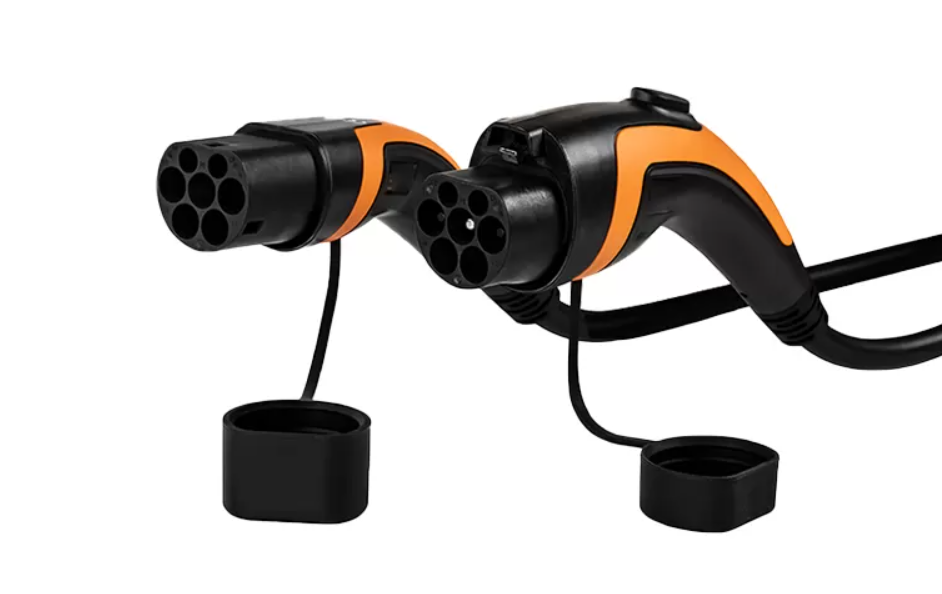
A Type 2 charging cable connects compatible electric vehicles to AC charging equipment, while its current rating and phase configuration determine the electrical capacity it can support. A 16A cable is not automatically single-phase, and a 32A cable is not automatically three-phase; buyers must check both the rated current and the cable's specified conductor configuration.
| Cable configuration | Typical supply | Approximate maximum power | Stocking considerations |
|---|---|---|---|
| 16A single-phase | 230V, single-phase | 3.7 kW | Lower-power home and destination charging |
| 16A three-phase | 400V, three-phase | 11 kW | Workplace and commercial AC charging |
| 32A single-phase | 230V, single-phase | 7.4 kW | Higher-current single-phase applications |
| 32A three-phase | 400V, three-phase | 22 kW | Higher-power AC charging where supported |
These are approximate values calculated using nominal voltage and current. Actual charging power depends on the installation, vehicle, charger and power factor. The cable rating alone does not guarantee that a vehicle will charge at the maximum power shown.
Type 2 interfaces are widely used for AC charging in many markets. The IEC 62196-2 standard specifies dimensional compatibility requirements for AC charging accessories, making it a useful reference when verifying connector specifications for a target market.
Selecting a charging cable requires matching its rated current and phase capability to the charging equipment and the vehicle's supported AC input. A cable with a higher current rating can provide flexibility, but it cannot increase the vehicle's onboard charging limit or compensate for an inadequate electrical supply.
For example, a 16A three-phase connection at 400V can support approximately 11 kW, while a 32A three-phase connection can support approximately 22 kW under suitable conditions. On single-phase 230V supplies, the corresponding theoretical values are about 3.7 kW and 7.4 kW.
Before placing a purchase order, confirm whether the target market commonly uses single-phase or three-phase AC charging, which vehicles customers operate, and whether the charging equipment supports the intended current. Check cable length, connector gender, rated voltage, temperature limits and relevant protection requirements as well.
For product planning, the TYPE 2 32A charging cable category can help buyers evaluate higher-current cable options. AUPINS customers should verify the exact model's phase configuration, current rating and supported use conditions against its technical datasheet rather than relying on the product category name alone.
A practical charging-cable inventory balances common electrical configurations with the vehicle types and installation scenarios served by the business. Stocking only one current rating may simplify purchasing, but it can leave distributors unable to serve customers with different power requirements.
For residential installers, single-phase cables may be relevant where household supplies and charger ratings limit available power. Commercial installers may need both 16A and 32A three-phase options for workplaces, hotels, fleet parking and other sites with three-phase infrastructure.
Cable length also affects inventory decisions. Shorter cables can be easier to handle in compact parking spaces, while longer options may suit charging points positioned farther from vehicle inlets. However, longer cables can be heavier and less convenient to store, so range planning should reflect actual customer demand.
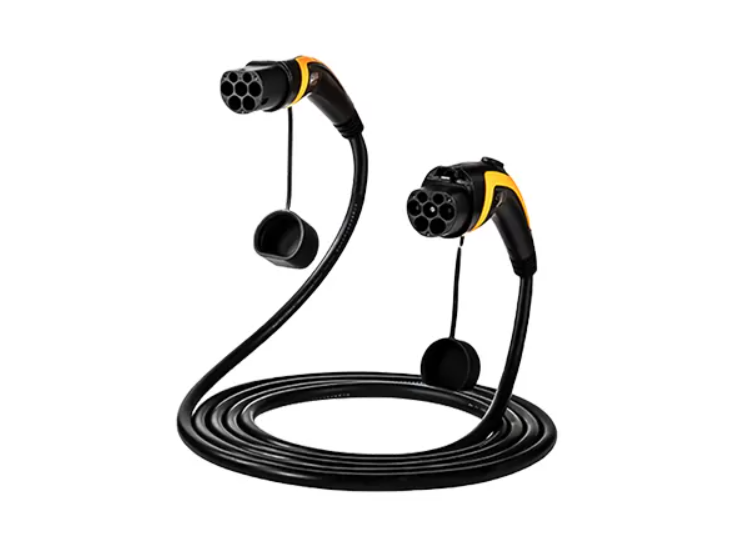
A Type 2-Type 2 cable is appropriate when both the charging point and vehicle use compatible Type 2 interfaces. Businesses evaluating a TYPE 2 to TYPE 2 EV charging cable should also confirm the required current rating, length and connector design. For portable charging use cases, a TYPE 2 mode 2 charging cable should be assessed according to its specific product configuration and intended connection method.
Supplier qualification checks whether each cable model meets the required electrical, connector, safety and documentation specifications for its intended market. Consistent documentation helps purchasing teams compare products, prevent specification errors and maintain traceability across repeat orders.
The IEC 61851-1 standard covers general requirements for conductive EV charging systems, including operating conditions, equipment connections and electrical safety. Buyers should confirm the applicable standards and regulatory requirements for the destination market rather than assuming that one specification covers every country.
A supplier request for quotation should identify the current rating, phase configuration, cable length, connector type, rated voltage, applicable standards, test documentation, packaging and order quantity. Ask for product datasheets and sample verification where appropriate, particularly when adding a new model to an established catalogue.
AUPINS can be evaluated as a potential supplier by requesting model-specific technical documentation and confirming production consistency, customization options, lead times and after-sales support. These checks help distributors select products based on documented suitability rather than price alone.
The choice between 16A and 32A Type 2 charging cables depends on phase configuration, vehicle capability, charging equipment and customer applications. A balanced inventory may include single-phase and three-phase options, with cable lengths selected around common installation needs. By checking technical documentation and confirming the exact product configuration before ordering, distributors and installers can reduce specification mismatches and build a more reliable EV charging product range.
No. Type 2 cables can be designed for single-phase or three-phase use. Check the cable's rated configuration before ordering.
At nominal 230V single-phase, the theoretical power is about 7.4 kW. At 400V three-phase, it is about 22 kW, provided the installation and vehicle support those conditions.
Generally, a compatible higher-rated cable can be used with equipment designed for a lower current, provided all connectors and system requirements are compatible. The system will still be limited by its lowest-rated component and control settings.
No. Faster charging requires a compatible three-phase supply, charging equipment and vehicle. If one component only supports single-phase charging, the full three-phase capacity will not be used.
Specify current, phase configuration, voltage, cable length, connector type, intended market, required documentation, quantity, packaging and delivery requirements.
Often, yes, if their customers have different vehicle and charging requirements. The appropriate inventory mix should be based on sales history, target markets and the applications served.

 English
 Deutsch
 Español
 italiano
 русский
 português
 Svenska
 العربية
 Nederland
 norsk
 français