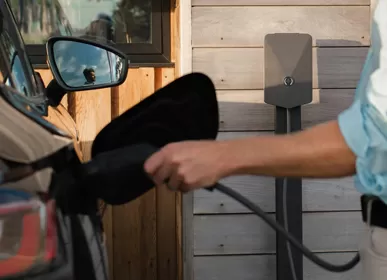
Most people are familiar with standard EV charging stations used in daily life. However, did you know there is a type of charging station that not only charges vehicles but also enables bidirectional interaction between the vehicle and the power grid? It is called a V2G charging station.
V2G stands for Vehicle-to-Grid technology. Unlike ordinary charging stations—which only provide power in one direction—V2G EV charging stations feature bidirectional current transmission capabilities. They can draw electricity from the grid to charge an EV, and conversely, send surplus power stored in the vehicle's battery back to the grid, effectively transforming the electric vehicle into a mobile energy storage unit.
Simply put:
A standard charging station acts like a drinking straw: current flows in only one direction—from the grid into the car. A V2G charging station, however, is different; it acts like a "smart sluice gate," allowing current to flow in both directions.
Grid → Car: When the vehicle's battery is low, it charges up normally.
Car → Grid: When the vehicle has surplus power, it can sell that excess electricity back to the grid!
In this way, your beloved car is no longer just a means of transportation; it transforms into a massive, mobile "power bank."
During grid operations, the concentrated use of air conditioning in the summer creates peak demand periods, often leading to tight supply situations. Conversely, the low demand during late-night hours results in underutilized power generation capacity. V2G technology effectively helps "shave peaks and fill valleys": when the grid load becomes too high, a fleet of EVs—acting like "mobile power banks"—feed power back into the grid. This ensures supply stability and helps mitigate issues such as power outages and voltage fluctuations.
For EV owners, V2G charging stations allow them to fully charge their vehicles during off-peak hours at night—when electricity rates are lowest—and then sell that surplus power back to the grid during peak daytime hours when rates are highest. This strategy of "buying low and selling high" monetizes surplus energy, turning the electric vehicle into a profitable "money-making assistant."
V2G The widespread adoption of this technology faces certain challenges; specifically, the frequent charging and discharging cycles involved can accelerate battery degradation, resulting in relatively high wear and tear on the vehicle's battery. This concern often deters many car owners.
The combination of V2G charging stations and energy storage systems has emerged as the key to resolving this dilemma. You can visualize the energy storage system as a massive "power buffer pool" or "reservoir."
When multiple vehicles simultaneously feed power back into the grid, this system acts as a "cushion," rapidly stabilizing fluctuations in voltage and frequency to ensure the grid remains stable and secure.
More importantly, this "buffer pool" can step in to substitute for the vehicle's own battery, shouldering the burden of frequent, rapid charging and discharging cycles. Consequently, your beloved vehicle's battery is "liberated"—no longer subjected to frequent deep charge-discharge cycles—and its rate of degradation is naturally reduced significantly.
In the future, as V2G technology becomes more widespread, electric vehicles will evolve beyond being mere modes of transportation; they will transform into flexible, efficient mobile energy storage units within the smart grid.
When you return home from work and plug in your car, it may not simply be "charging"—it could actually be "working."
Depending on the grid's specific needs, your EV can intelligently decide whether to charge up or discharge power—and, in the process, help you earn a little extra pocket money. That day may arrive sooner than you think.
 English
 Deutsch
 Español
 italiano
 русский
 português
 Svenska
 العربية
 Nederland
 norsk
norsk français