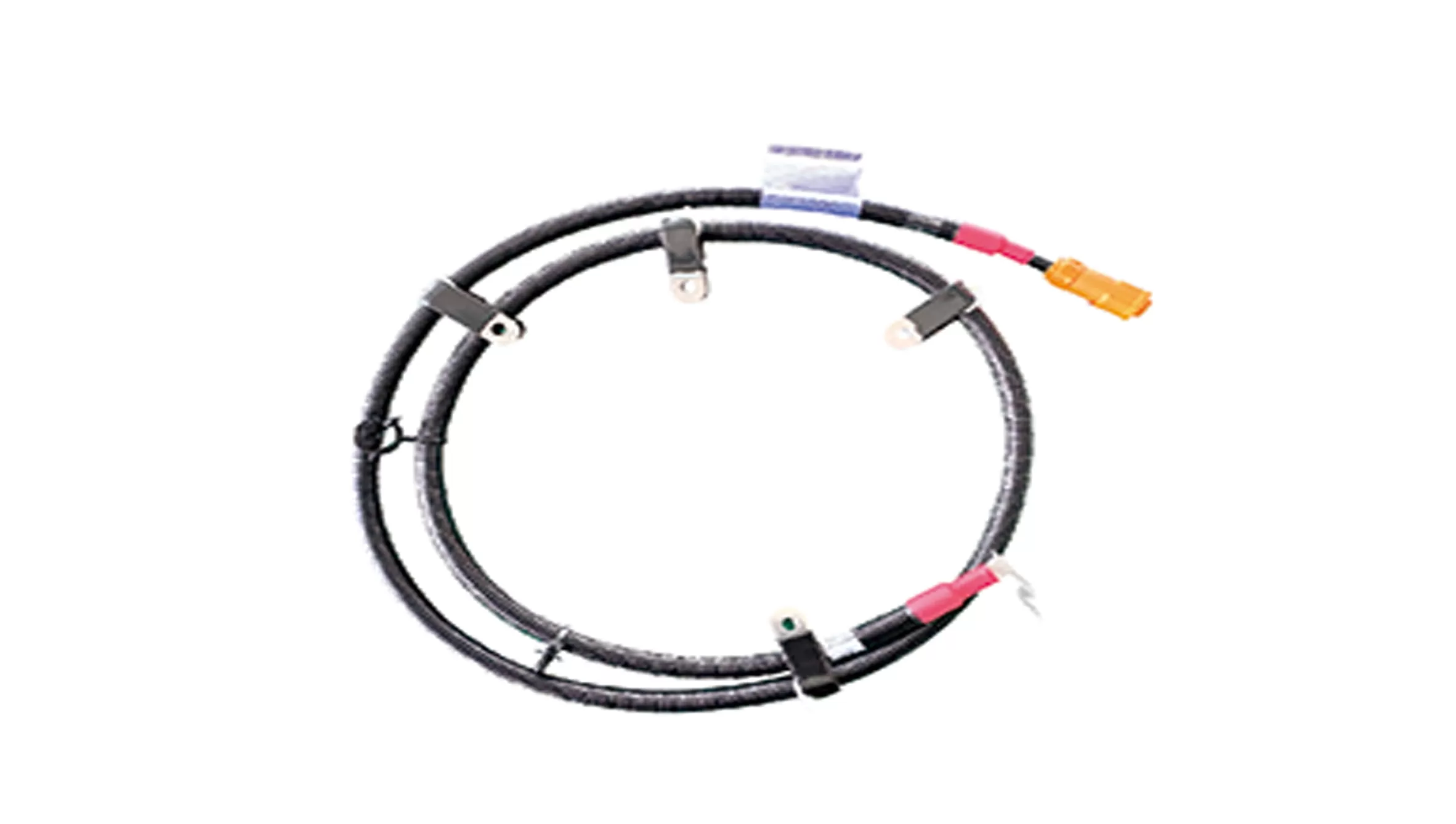
High-voltage wiring harnesses of new energy vehicles mainly use high-purity copper or aluminum as wire materials, which have good conductivity and meet the needs of large current and high voltage transmission. For example, copper conductors are widely used due to their excellent conductivity and mechanical strength, while aluminum conductors have advantages in certain applications due to their light weight and low cost. To ensure the safety of the high-voltage wiring harness, the wires are coated with insulating materials. Common insulating materials include cross-linked polyethylene (XLPE), polyvinyl chloride (PVC), ethylene propylene rubber (EPR), etc. In new energy vehicles, XLPE is favored for its excellent electrical properties and heat resistance.
In order to prevent electromagnetic interference (EMI) from affecting other electronic systems of the vehicle, high-voltage wiring harnesses use shielding materials to effectively absorb electromagnetic waves and reduce interference. Common shielding materials include metal braided mesh, aluminum foil, conductive cloth, etc.
The sheath is an important part to protect the high-voltage wire harness from the external environment. It needs to have the characteristics of weather resistance, wear resistance, oil resistance and flame retardancy. Common sheath materials include polyvinyl chloride (PVC), thermoplastic elastomer (TPE), nylon, etc.
Wire manufacturing of different wiring harness types includes processes such as wire drawing, annealing, and twisting. The raw metal is drawn into a single wire of the required diameter through a wire drawing machine; annealing treatment is performed to improve the flexibility of the wire. Multiple single wires are twisted into one strand to enhance the mechanical strength of the wire. Insulation treatment is the process of coating the outside of the wire with insulating material. The insulating material is evenly coated on the surface of the wire through an extruder, and a solid insulating layer is formed after cooling and solidification. The manufacturing of the shielding layer includes tightly wrapping shielding materials such as metal braided mesh or aluminum foil on the outside of the insulating layer. This process requires ensuring close contact between the shielding layer and the wire to effectively reduce electromagnetic interference. Connectors are equipped at both ends of the high-voltage wire harness to connect to other electrical systems of the vehicle. Connector manufacturing requires precision machining and injection molding technology to ensure the accuracy of the connector. During the assembly process, the wires should be in close contact with the connectors to reduce contact resistance and improve conductivity.
n e x t
 English
 Deutsch
 Español
 italiano
 русский
 português
 Svenska
 العربية
 Nederland
 norsk
 français