Purchasing a DC fast charger is a significant investment for charging station operators, fleet managers, and commercial property developers. However, the initial equipment price represents only one part of the overall expense. Electricity consumption, installation, maintenance, software subscriptions, and unexpected downtime can all influence the long-term financial performance of a charging station.
Understanding the total cost of ownership (TCO) helps buyers compare different charging solutions beyond their advertised prices. This guide explains the major cost components of commercial DC fast chargers and provides a practical framework for evaluating long-term ownership expenses.
Total cost of ownership refers to the combined expenses associated with purchasing, installing, operating, and maintaining charging equipment throughout its service life.
For commercial DC fast chargers, TCO generally includes five categories:
Cost Category | Typical Expenses |
Initial investment | Charger purchase, accessories, installation |
Energy costs | Electricity consumption, energy losses, demand charges |
Maintenance | Inspections, repairs, spare parts, warranty |
Software and connectivity | Network subscriptions, payment processing, remote management |
Long-term expenses | Component replacement, downtime, equipment upgrades |
Unlike purchase price comparisons, TCO analysis considers how much an equipment owner spends over several years of operation. The actual result depends on equipment configuration, electricity tariffs, utilization, local labor costs, and maintenance arrangements.
It is also important to distinguish equipment ownership costs from overall charging station profitability. Revenue, customer acquisition, and financing returns belong in a separate business investment analysis.
The initial investment usually represents the largest upfront expense when acquiring a commercial DC fast charger. But comparing the equipment quotations requires looking beyond the charger itself.
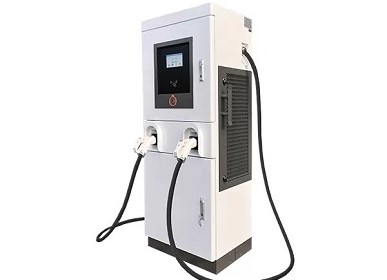
Equipment purchase costs vary according to several factors:
Rated charging power, such as 40kW, 160kW, or 400kW.
Number of charging connectors and simultaneous charging capabilities.
Power modules, cooling systems, and electrical components.
Payment terminals, displays, and communication interfaces.
Enclosure protection, certifications, and customization requirements.
Installation costs should also be included in the initial investment.
Installation Item | Potential Cost Factors |
Electrical infrastructure | Transformers, switchgear, distribution panels |
Cable installation | Power cables, conduits, cable routing |
Civil works | Foundations, trenching, concrete work |
Site preparation | Parking layout, drainage, protective structures |
Commissioning | Electrical testing, configuration, system integration |
Permits | Local approvals, inspections, engineering documentation |
According to the U.S. Department of Energy, EV charging infrastructure deployment involves additional soft costs, including permitting, site selection, utility interconnection, and inspections, which can significantly affect overall project costs and timelines.
For this reason, buyers should request separate quotations for charging equipment, installation, and electrical upgrades rather than treating them as one combined price.
Electricity consumption is one of the most important recurring expenses for a DC fast charging station. Charger conversion efficiency directly affects how much electricity must be purchased to deliver a given amount of energy to EV batteries.
For example, a charger operating at 94% efficiency requires approximately 1,064kWh of input electricity to deliver 1,000kWh of DC output energy.
The basic calculation is:
Input Energy = Delivered DC Energy ÷ Conversion Efficiency
The difference between input energy and delivered energy represents conversion losses.
AUPINS provides several DC fast charger configurations with different rated power outputs and efficiency specifications:
Charger Model | Rated Power | Conversion Efficiency |
EF040 Series | 40kW | 94% |
EF160 Series | 60–240kW | 94% |
EF400 Series | 360kW | 94% |
EF400 Series | 400kW | 95% |
These specifications are measured at nominal output. Actual operating efficiency may vary depending on load, temperature, and operating conditions.
For example, assume a commercial charging station delivers 100,000kWh of DC energy annually, with an electricity tariff of $0.15/kWh.
Efficiency | Annual Input Energy | Annual Electricity Cost |
94% | 106,383kWh | $15,957 |
95% | 105,263kWh | $15,789 |
Under these simplified assumptions, the difference is approximately $168 annually.
This example demonstrates why efficiency should be considered when comparing equipment. But note that the actual savings depend on the charging profile and electricity tariff.
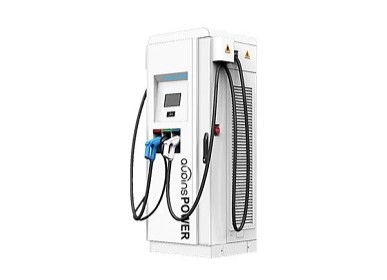
Buyers can explore the AUPINS EF040 series DC fast EV charger, EF160 series DC Fast charger, and EF400 series high-power DC charger to compare available configurations.
Regular maintenance helps protect equipment performance and reduce unexpected repair costs. Although commercial DC chargers are usually designed for demanding operating environments, their electrical and mechanical components still need periodic inspection.
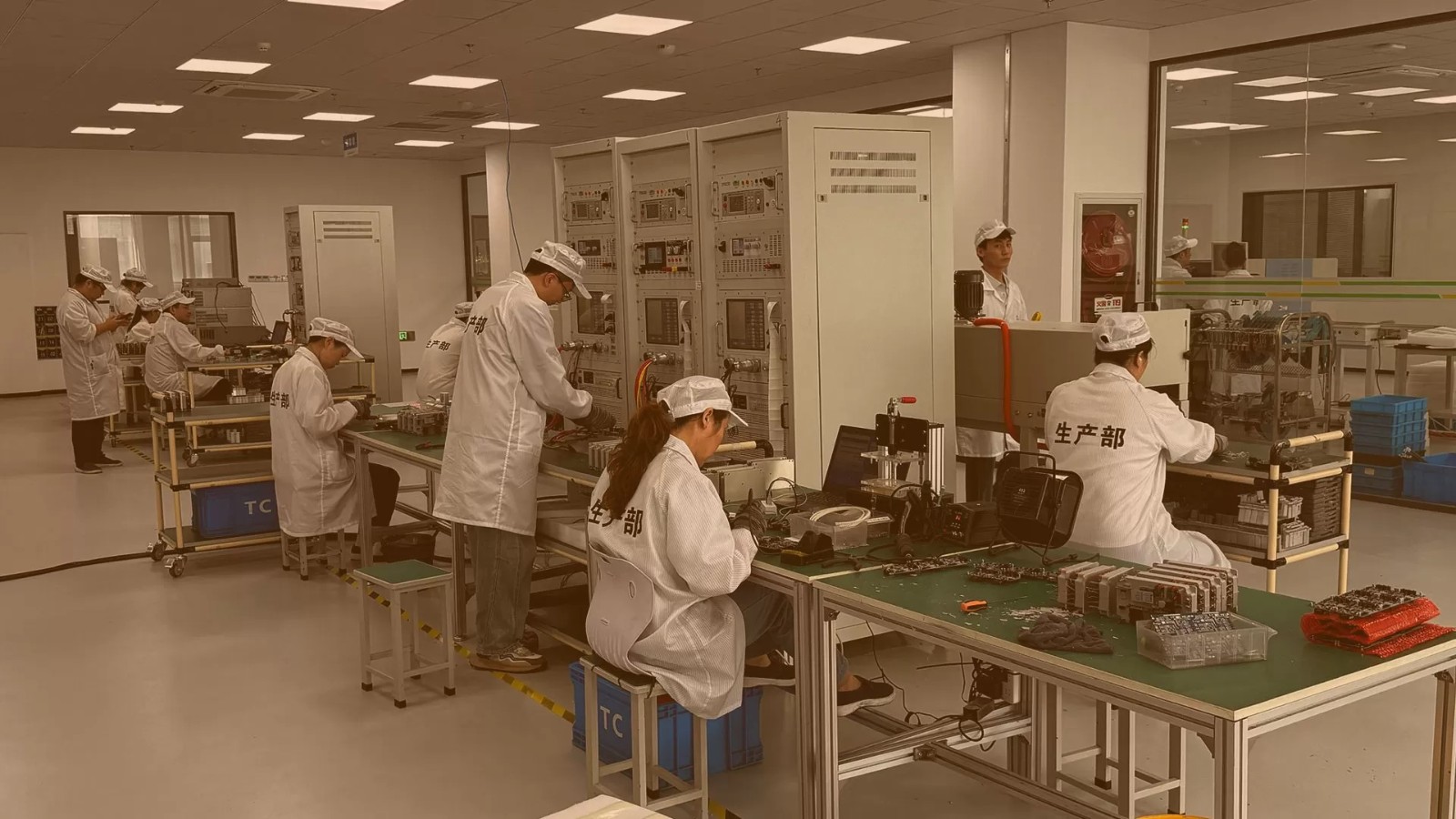
Common maintenance activities include:
Inspecting charging cables, connectors, and connector holders.
Cleaning air intake and exhaust vents.
Checking cooling fans and ventilation systems.
Inspecting electrical connections and protective devices.
Testing emergency stops and safety functions.
Checking displays, communication interfaces, and payment systems.
The maintenance requirements depend on the charger's design and operating environment. Dusty locations, high temperatures, frequent charging sessions, and outdoor exposure may increase maintenance demands.
Warranty coverage is another important part of TCO. Buyers should confirm:
Warranty Item | What to Verify |
Coverage period | Standard warranty duration |
Power modules | Whether replacement is included |
Charging connectors | Cable and connector coverage |
Labor costs | Whether repair labor is covered |
Spare parts | Availability and replacement lead times |
Technical support | Remote and on-site service arrangements |
A low purchase price may become less attractive if replacement parts are expensive or technical support is difficult to access.
The U.S. Department of Energy's EV Charging Infrastructure Operation and Maintenance Guide provides additional guidance on maintenance responsibilities and recurring operating expenses.
Modern DC fast chargers often include communication and remote management capabilities. These functions can improve operational visibility, but buyers should understand their associated service costs.
Potential recurring expenses include:
Charging management platform subscriptions.
SIM cards and mobile data connectivity.
Cloud storage and remote monitoring services.
Payment processing and transaction fees.
Software maintenance and firmware updates.
Before purchasing, ask suppliers whether software access is included, whether subscription fees apply, and whether third-party charging management platforms are supported.
For example, AUPINS DC fast charger models support OCPP 1.6J communication, with upgrade options depending on the model. Buyers should confirm the exact protocol version, backend compatibility, and any associated service charges.
Remote monitoring and diagnostics can help identify equipment issues earlier, while remote firmware updates can simplify software maintenance,though these functions do not eliminate the need for physical inspections and repairs.
Electricity expenses involve more than the number of kilowatt-hours consumed. Commercial utility tariffs may also include demand charges based on peak power consumption.
For high-power DC charging stations, simultaneous charging sessions can create significant peak demand. Depending on the local tariff structure, this may increase monthly electricity bills even when overall energy consumption is relatively moderate.
Other potential hidden costs include:
Expense | Possible Impact |
Demand charges | Higher electricity bills during peak periods |
Unplanned downtime | Lost charging availability and potential revenue |
Replacement components | Unexpected repair expenses |
Network interruptions | Payment or remote management disruptions |
Future compatibility | Additional investment for changing requirements |
Downtime deserves particular attention. A charger that is unavailable because of a faulty power module, damaged cable, or communication failure may interrupt customer service and reduce usable charging capacity.
When comparing suppliers, examine spare parts availability, troubleshooting support, remote diagnostics, and repair response commitments.
A practical TCO calculation allows buyers to compare different charging equipment configurations over the same evaluation period.
The basic formula is:
TCO = Purchase Price + Installation Costs + Energy Costs + Maintenance Costs + Software Fees + Repair and Replacement Costs
If applicable, incentives, residual value, and other recoverable amounts can be deducted from the total.
Consider the following illustrative five-year evaluation framework:
Cost Category | Year 1 | Years 2–5 |
Equipment purchase | Initial payment | — |
Installation | Initial payment | — |
Electricity | Annual consumption cost | Annual consumption cost |
Maintenance | Inspection and servicing | Recurring servicing |
Software | Subscription and connectivity | Recurring subscription |
Repairs | As required | As required |
For an accurate comparison, buyers should use the same assumptions for:
Evaluation period and expected equipment service life.
Annual energy delivered to vehicles.
Electricity price and demand charge structure.
Maintenance frequency and warranty coverage.
Software and connectivity fees.
Expected component replacement requirements.
A consistent calculation helps identify whether a lower-priced charger actually offers a lower long-term ownership cost.
The total cost of ownership of a DC fast charger extends well beyond its initial purchase price. Electricity efficiency, installation requirements, maintenance, software subscriptions, demand charges, and equipment downtime all influence long-term expenses. For commercial buyers, the best purchasing decision comes from comparing complete equipment configurations, verifying warranty and service conditions, and evaluating operating costs under realistic usage assumptions.
TCO includes equipment purchase, installation, electricity, maintenance, software subscriptions, repairs, and potential component replacements throughout the ownership period.
Prices vary according to charging power, connector configuration, features, certifications, and customization. Installation and electrical infrastructure costs should be quoted separately.
Yes. Higher conversion efficiency reduces electricity losses for the same amount of delivered DC energy, potentially lowering long-term electricity expenses.
Maintenance frequency depends on the manufacturer's recommendations, operating environment, and usage intensity. Regular inspections of cables, connectors, cooling systems, and electrical components are important.
Not always. Buyers should confirm whether backend connectivity, remote monitoring, software updates, and payment processing are included or charged separately.
Operators can compare energy efficiency, negotiate suitable warranty coverage, maintain equipment regularly, monitor peak electricity demand, and ensure timely access to spare parts and technical support.
 English
 Deutsch
 Español
 italiano
 русский
 português
 Svenska
 العربية
 Nederland
 norsk
 français