Choosing a commercial DC fast EV charger requires more than comparing rated power outputs. Voltage range, maximum current, conversion efficiency, power factor, protection ratings, and electrical safety features all influence whether a charger can operate reliably with different electric vehicles and commercial charging environments.
For charging station operators, fleet managers, distributors, and project developers, understanding these specifications helps reduce compatibility risks and make more informed purchasing decisions. This guide explains the key technical parameters to check before ordering a commercial DC fast charger.
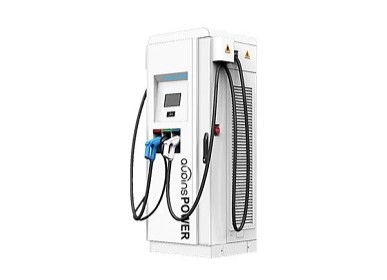
Commercial DC fast EV charger specifications describe the electrical performance, operating limits, and protection capabilities of charging equipment. Buyers should evaluate the complete specification sheet rather than focusing on charging power alone.
The following parameters deserve particular attention:
Specification | What to Check | Why It Matters |
Input voltage | AC voltage, frequency, phase | Confirms grid compatibility |
DC output voltage | Minimum and maximum voltage | Determines vehicle compatibility |
Output current | Maximum DC current | Affects charging performance |
Conversion efficiency | Efficiency at rated output | Influences energy losses |
Power factor | PF at nominal output | Helps evaluate grid-side performance |
Protection rating | IP and IK ratings | Indicates environmental and impact protection |
Safety functions | Overvoltage, leakage, grounding protection | Supports safe operation |
Charging standards | Applicable IEC standards and connector types | Supports compliance and integration |
When comparing commercial DC fast EV chargers, request model-specific datasheets and verify that the quoted configuration matches the intended application.
Once your power and connector requirements are set, use this China EV charger manufacturer shortlist to compare potential suppliers before issuing an RFQ.
DC output voltage defines the voltage range that a charging station can supply to a compatible electric vehicle. It is one of the most important specifications for ensuring compatibility across different battery platforms.
Many modern DC fast chargers support output voltage ranges extending to 1,000V DC. However, the actual charging voltage depends on the vehicle's battery system, battery management system (BMS), and charging requirements.
For example, AUPINS offers different voltage configurations across its DC charger product range:
EF040 Series: CCS output from 200V to 1,000V DC.
EF160 Series: CCS2 output from 150V to 1,000V DC.
EF400 Series: CCS2 output from 150V to 1,000V DC.
A wider voltage range can accommodate more vehicle battery configurations, but buyers should also verify other factors, such as connector standards and communication compatibility.
Before purchasing, confirm the voltage requirements of the target vehicle fleet and ensure that the charger's operating range covers those requirements.
Output current measures the amount of electrical current delivered to an EV battery. Together with voltage, it determines the maximum DC power available during charging.
The basic relationship is:
Power (kW) = Voltage (V) × Current (A) ÷ 1,000
For example, delivering 400A at 800V corresponds to 320kW of DC power, assuming the charger and vehicle can sustain those operating conditions.
When comparing chargers, check:
Maximum output current per connecton.
Whether the current rating is continuous or subject to operating conditions.
Cable and connector current ratings.
Current allocation during simultaneous charging.
Vehicle-side charging limitations.
A higher current rating does not automatically guarantee faster charging. The vehicle's battery management system, voltage level, charging curve, and thermal limitations also affect actual charging performance.
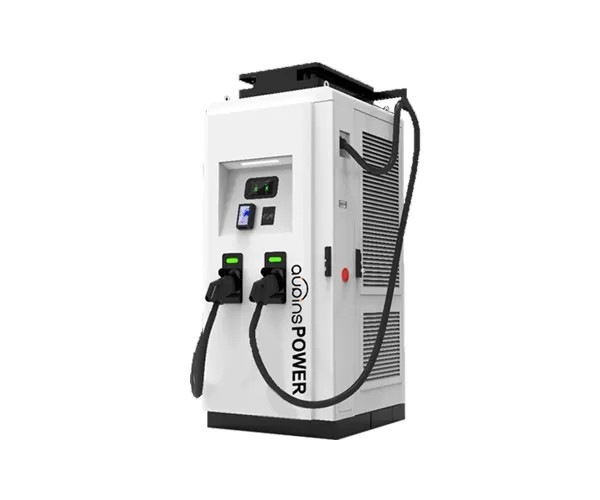
Charging efficiency measures how effectively a charger converts input electrical energy into usable DC output energy. A higher conversion efficiency generally means lower energy losses during charging.
For commercial charging operators, even small differences in efficiency can become relevant when equipment operates frequently throughout the day.
For example, AUPINS product specifications include:
Charger Model | Conversion Efficiency | Power Factor |
EF040 Series | 94% | 0.99 |
EF160 Series | 94% | 0.99 |
EF400 360kW | 94% | 0.99 |
EF400 400kW | 95% | 0.99 |
These figures are specified at nominal output.
Power factor (PF) is different from conversion efficiency. It describes the relationship between real power and apparent power on the AC input side. A power factor close to 1 indicates more effective utilization of the electrical supply.
When comparing suppliers, check whether efficiency figures are measured at nominal output and under comparable operating conditions. Also review performance under partial loads, where available.
Protection ratings and built-in electrical safeguards help determine whether a DC fast charger is suitable for its intended operating environment.
For outdoor commercial installations, buyers should review both enclosure protection and electrical protection functions.
IP ratings describe protection against the ingress of solid objects and water. For example, IP54 indicates protection against limited dust ingress and water splashes from different directions. But it does not mean the equipment is waterproof.
IK ratings indicate the degree of protection against mechanical impact. IK10 represents a defined high level of impact resistance.
AUPINS EF040, EF160, and EF400 product specifications include IP54 and IK10 enclosure protection.
Other important electrical protection functions include:
Overvoltage and undervoltage protection.
Overcurrent and overload protection.
Short-circuit protection.
Current leakage protection.
Grounding protection.
Lightning surge protection.
Overtemperature protection, depending on the model.
Buyers should also check operating temperature, humidity, altitude, and cooling design. For example, EF160 and EF400 use forced-air cooling and specify an operating temperature range of -30°C to +55°C, with derating above +55°C.
These details are important for installations in hot climates, exposed parking areas, and high-utilization charging locations.
Charging standards and certification documents help buyers verify that equipment has been evaluated against relevant technical and safety requirements.
For commercial DC fast charging projects, IEC 61851 is an important international standard series.
Two relevant documents include:
IEC 61851-1: General requirements for electric vehicle conductive charging systems.
IEC 61851-23: Requirements for DC electric vehicle supply equipment.
Buyers should review the applicable standards for their destination market and confirm which editions and national or regional requirements apply.
Do not rely on a generic statement such as CE compliant or internationally certified. Request supporting documentation and verify that it covers the actual charger model and configuration being purchased.
Other items to confirm include connector compatibility, communication interfaces, electromagnetic compatibility (EMC), and applicable local electrical regulations.
A structured purchasing checklist helps distributors, operators, and project developers compare suppliers more consistently.
Before confirming an order, make sure the following information is available:
Purchasing Item | Questions to Ask the Supplier |
Input requirements | Does the charger match the site's AC supply? |
DC voltage | Does the output range support target vehicles? |
Output current | What is the maximum current per connector? |
Efficiency | At what load condition is efficiency measured? |
Power factor | What is the PF at nominal output? |
Protection | Are IP54, IK10, and electrical safeguards available? |
Temperature | What are the operating and derating limits? |
Certification | Can model-specific test reports and certificates be provided? |
Connectivity | Are OCPP and required network interfaces supported? |
Warranty | What warranty, spare parts, and technical support are included? |
It is also advisable to request a complete datasheet, product dimensions, installation documentation, and available certification records before finalizing the purchase.
Selecting a commercial DC fast EV charger requires evaluating electrical compatibility, output performance, energy efficiency, and safety together. Voltage and current determine the available charging capability, while efficiency, power factor, protection ratings, and certifications help assess long-term operational suitability.
For commercial buyers, comparing complete technical specifications and verifying the exact equipment configuration is more reliable than choosing a charger based on rated kilowatts alone. AUPINS provides DC fast charging options from the EF040 and EF160 series to the high-power EF400 series, supporting different commercial charging requirements.
Many commercial DC fast chargers support output ranges up to 1,000V DC. The required range depends on the battery voltage and charging requirements of the target EV fleet.
Efficiency around 94% or higher is a useful benchmark when comparing commercial equipment, provided the figures are measured under comparable conditions.
Voltage represents electrical potential, while current represents the flow of electrical charge. Together, they determine the available charging power.
IP54 provides protection against limited dust ingress and water splashes. Buyers should still consider installation conditions, drainage, maintenance, and additional environmental protection requirements.
A high power factor indicates more effective use of the AC electrical supply and can help reduce reactive power requirements within the electrical system.
IEC 61851-1 and IEC 61851-23 are important standards to review. Applicable regional regulations, certification requirements, and model-specific test documentation should also be verified before procurement.
 English
 Deutsch
 Español
 italiano
 русский
 português
 Svenska
 العربية
 Nederland
 norsk
 français