Thermal management is essential for high-power DC fast chargers because electrical losses generate heat in power modules, cables, and charging connectors. Without effective heat dissipation, excessive temperatures can reduce charging output, accelerate component aging, and trigger protective shutdowns.
Air cooling and liquid cooling address different thermal challenges. Understanding these technologies is important when selecting reliable charging equipment. This guide compares their operating principles, advantages, maintenance requirements, and suitability for high-power EV charging applications.
Thermal management in DC fast charging refers to controlling heat generated by power conversion equipment, electrical conductors, and charging connectors.
Electrical resistance produces heat as current flows through components. Resistive heat generation follows the relationship:
Heat Generation (W) = Current² (A²) × Resistance (Ω)
This means doubling current produces four times the resistive heat when resistance remains constant.
High temperatures can affect several components:
Power modules: Excessive heat may reduce conversion performance or component reliability.
Charging cables: High current increases conductor heating.
Connector contacts: Contact resistance can cause localized temperature rises.
Electronic controls: Temperature-sensitive components require suitable operating conditions.
Effective cooling helps maintain safe temperatures and supports consistent charging availability.
Air-cooled DC fast chargers use natural airflow or electrically powered fans to transfer heat from internal components to the surrounding environment.
Forced-air cooling is commonly used in commercial charging cabinets. Fans move air through heat sinks and ventilation channels, removing heat generated by power modules and other electrical components.
The main advantages include relatively straightforward mechanical construction, established maintenance procedures, and the absence of a liquid coolant circulation circuit.
For example, the AUPINS EF160 series DC fast charger uses forced-air cooling across its available 60–240kW configurations. Its published operating temperature range is -30°C to +55°C, with derating specified above +55°C.
However, air cooling depends on ambient temperature, ventilation design, and unobstructed airflow. Dust accumulation, blocked vents, or fan failures can reduce heat dissipation performance.
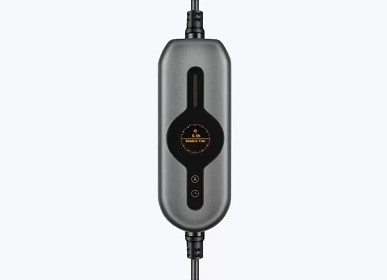
Liquid-cooled EV charging cables circulate coolant through dedicated channels to remove heat from conductors and connector assemblies.
Unlike conventional air-cooled cable assemblies, liquid cooling enables more effective heat transfer from components exposed to high charging currents.
A typical liquid-cooled cable system includes:
Coolant circulation channels.
A pump and cooling unit.
Charging cable conductors.
Temperature monitoring components.
Charging connector contacts.
The cooling medium absorbs heat and transfers it to a heat exchanger, where the heat is released.
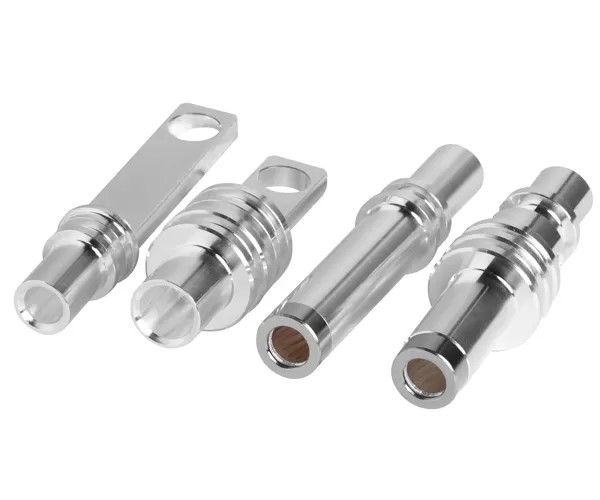
AUPINS offers a 500A liquid-cooled CCS2 charging connector rated at 500A and 1,000V DC.
Liquid cooling can allow higher currents through manageable cable dimensions, improving handling compared with an equivalently rated passive cable design.
But it introduces additional components, including pumps, coolant lines, seals, and monitoring equipment.
Air cooling and liquid cooling differ in thermal performance, system complexity, maintenance requirements, and application suitability.
Comparison | Air Cooling | Liquid Cooling |
Cooling medium | Ambient air | Circulating coolant |
Main components | Fans, heat sinks, vents | Pumps, coolant channels, heat exchangers |
System complexity | Generally lower | Generally higher |
Maintenance | Fan and ventilation inspections | Coolant, pump, seal, and leak inspections |
High-current cables | Limited by passive heat dissipation | Supports higher current density |
Typical application | Charging cabinets and power modules | High-current cables and connectors |
Main consideration | Ambient temperature and airflow | Cooling circuit reliability |
The two technologies are not mutually exclusive. A charging station can use forced-air cooling for its power conversion cabinet while employing a liquid-cooled cable assembly for high-current delivery.
The most suitable solution depends on which components generate heat and the amount of current the charging system must carry.
Temperature derating occurs when charging equipment reduces its allowable output to prevent overheating or operating outside specified thermal limits. This is particularly important during continuous charging, high ambient temperatures, or repeated high-power sessions.
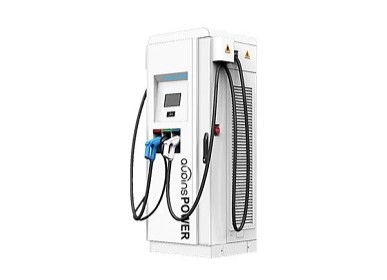
For example, the AUPINS EF400 series high-power DC fast charger provides 360kW and 400kW configurations using forced-air cooling. Its published specifications indicate an operating temperature range of -30°C to +55°C, with derating specified above +55°C.
Derating behavior should be evaluated using the manufacturer's technical documentation rather than assuming that rated output remains available at every temperature.
Charging performance can also be limited by the vehicle's battery management system, connector current rating, and battery temperature.
Buyers should therefore distinguish charger-side thermal limitations from vehicle-side charging restrictions.
Cooling system maintenance directly affects charger availability and long-term operating costs.
Air-cooled charging equipment generally requires inspections of fans, ventilation openings, and heat dissipation surfaces. Dust accumulation may require more frequent cleaning in industrial or roadside environments.
Liquid-cooled cable systems require additional attention to coolant condition, pump operation, fluid circulation, and leakage prevention.
Maintenance Item | Air-Cooled System | Liquid-Cooled System |
Air vents | Regular inspection | Depends on cooling unit |
Cooling fans | Inspect and replace if necessary | Inspect if fitted |
Coolant | Not required | Monitor and service |
Pumps | Not required | Inspect operation |
Temperature sensors | Check functionality | Check functionality |
Leak inspection | Not applicable | Required where relevant |
Neither technology guarantees longer service life without suitable maintenance.
For commercial operators, the best approach is to compare inspection intervals, replacement parts, environmental requirements, and supplier support before purchasing equipment.
Selecting a cooling system requires evaluating the complete charging application rather than comparing cooling technologies in isolation.
Commercial buyers should consider:
Charging power and current: Determine continuous current requirements for each connector.
Ambient temperature: Assess outdoor temperatures and cabinet ventilation conditions.
Charging frequency: Consider utilization rates and consecutive charging sessions.
Cable handling: Evaluate cable weight, flexibility, and user accessibility.
Maintenance resources: Compare cooling component complexity and service availability.
For conventional commercial DC charging applications, forced-air-cooled cabinets can provide a practical solution.
For higher-current charging cables, liquid cooling may offer advantages in conductor temperature control and cable handling.
AUPINS supplies DC EV charging cables alongside commercial charging equipment, enabling buyers to evaluate connector and cable requirements separately from cabinet cooling specifications.
Air cooling and liquid cooling serve different purposes in high-power DC charging systems. Forced-air cooling is widely applicable to charger cabinets, while liquid cooling is particularly useful for managing heat in high-current charging cables and connectors.
Commercial buyers should assess continuous current requirements, temperature derating, operating conditions, and maintenance complexity before selecting equipment. Matching the cooling solution to the actual thermal load is more practical than simply choosing a technology which appears more advanced.
Liquid cooling is effective for high-current cables and connectors, while air cooling remains practical for many charging cabinets. The better choice depends on system requirements.
No. High-power charging cabinets can use forced-air cooling, although very high-current cable assemblies may benefit from liquid cooling.
Electrical resistance, power conversion losses, high ambient temperatures, restricted airflow, and cooling system failures can contribute to overheating.
Temperature derating is the reduction of allowable charging output when equipment approaches specified thermal limits, helping prevent overheating.
They may require additional maintenance because of pumps, coolant, seals, and circulation components. Actual costs depend on system design and usage.
Yes. Cabinet cooling and cable cooling are separate systems, allowing a forced-air-cooled charger to use a compatible liquid-cooled cable assembly when properly engineered and validated.
 English
 Deutsch
 Español
 italiano
 русский
 português
 Svenska
 العربية
 Nederland
 norsk
 français