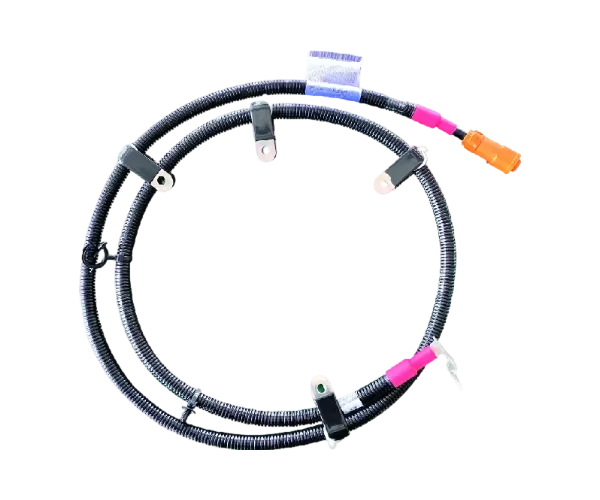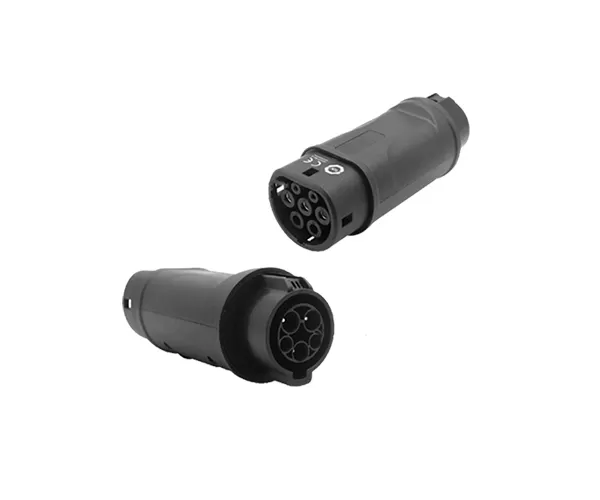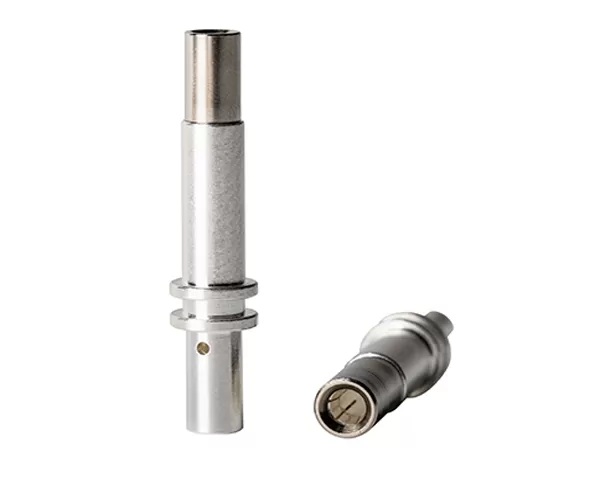
Charging terminal pin are core components for power transmission, communication, and safety between new energy vehicles and charging stations, directly affecting charging efficiency, stability, and lifespan. Faced with the two mainstream charging interfaces, Type 1 and Type 2, many engineers easily encounter problems in selection, adaptation, and current matching. This article uses clear standards, structural differences, electrical parameters, and applicable scenarios to help you distinguish between Type 1 and Type 2, quickly selecting the correct charging pin solution.
According to different charging rules, charging terminals can be divided into GB/T terminals, SAE terminals, IEC terminals, and NACS terminals used in a nacs socket. According to different current, charging terminals can be divided into AC terminals and DC terminals. Different standards and currents combine to form a variety of specifications of charging terminals.
In a charging device such as an AC charging plug, different charging terminals play different roles, such as CP(control confirmation) terminal, CC (charge link confirmation) terminal, PE (ground protection) terminal, L (AC power supply) terminal, N (neutral wire) terminal, their diameter and tail cable size are different. And in order to facilitate the link of the charging device, the terminals are divided into male and female terminals.
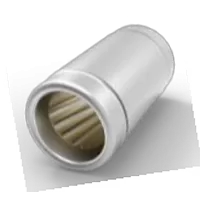
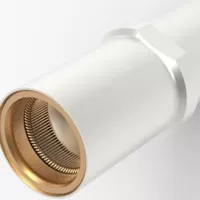
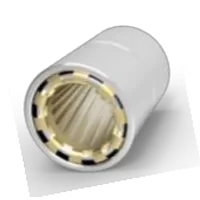
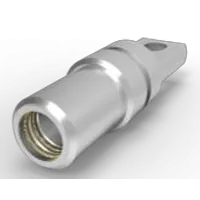
In addition, in the design structure, in order to meet different customer needs, the same standard charging terminals can also have a variety of structures, such as leaf spring terminals, crown band terminals, rotate contact terminals, ring core terminals, torsion spring terminals, O spring terminals, etc.
| Features of Different Types of Electric Charger Pins | ||||||
Terminal type | Leaf spring terminal | Crown band terminal | Rotate contact terminal | Ring core terminal | Torsion spring terminal | O spring terminal |
| Picture | 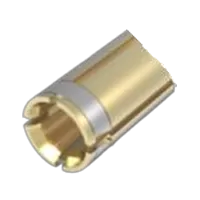 | 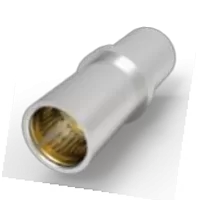 |
|
|
|
|
| Cost advantage | ★★★★★ | ★★★★★ | ★★★★ | ★★★★★ | ★★★ | ★★★☆ |
| Size | ★★★★★ | ★★★★★ | ★★★★ | ★★★★★ | ★★★☆ | ★★★★★ |
| Temperature rise | ★★★☆ | ★★★★ | ★★★★☆ | ★★★★★ | ★★★★★ | ★★★★☆ |
| Insertion and extraction force | ★★★ | ★★★ | ★★★★★ | ★★★★★ | ★★★★★ | ★★★☆ |
| Current carrying capacity | ★★★☆ | ★★★☆ | ★★★★ | ★★★★☆ | ★★★★★ | ★★★★☆ |
| Service life | ★★★★☆ | ★★★★ | ★★★★☆ | ★★★★★ | ★★★★★ | ★★★★ |
1. The difference between the standard and the market:
Type1 follows the SAE J1772 Combo standard, one of the key sae ev charging standards, which is mainly used in the North American and Japanese markets. The five holes of the J1772/Type 1 AC charging port are: L1: AC charging phase line 1; N: AC charging N line; PE: Protective earth, protective earth; CP: Control pilot; PP: Proximity Pilot. Type2 follows the IEC 62196 standard and is mainly used in the European market. The seven holes of the AC charging port of Type2 are L1/L2/L3, N, CP, PP, PE.
2. The difference between current and voltage:
The rated voltage of Type 1 interface is single-phase 250V,32A; The rated voltage of the Type 2 interface is 250V for single phase and 480V for three phase. The rated current of single-phase charging is 13A, 20A, 32A, 63A and 70A several recommended specifications, and the rated current of three-phase charging is 13A, 20A, 32A and 63A several recommended specifications.
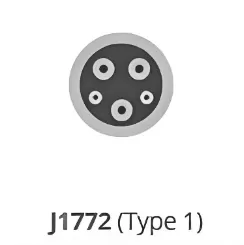
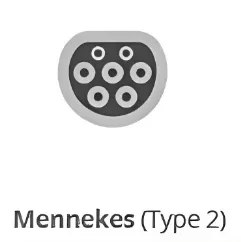
Across different types of ev connectors, electric vehicle charger pins are the core current path of a charging system; their materials, structure, and standards directly determine charging efficiency and safety. Type 1 offers strong compatibility and mature applications; Type 2 offers higher power and greater scalability, representing the industry mainstream trend. In actual projects, the appropriate pin type and structure must be selected based on regional standards, power requirements, and lifespan requirements.
The electrical connector pin is a key component in a charging device that transmits electrical energy. It is usually made of copper and its alloys, has a specific shape and size, and can be tightly connected to the charging interface to ensure the efficient transmission of electrical energy. Type1 Charger Pins, generally with high compatibility and stability, can meet the needs of most traditional car charging. In the early construction of electric vehicle charging infrastructure, the Type1 charging pin laid the foundation for the popularity of electric vehicles.
The Type2 Charger Pins represent a more advanced and efficient charging technology. Compared with Type1, Type2 charging pins usually have higher charging power and faster charging speed, which can meet the needs of modern vehicles for fast charging. With the continuous progress of electric vehicle technology and the increasing perfection of charging facilities, Type2 charging pins are more and more widely used in the automotive industry and have become an important force to promote the development of the electric vehicle industry.

 English
 Deutsch
 Español
 italiano
 русский
 português
 Svenska
 العربية
 Nederland
 norsk
norsk français