Electric vehicle (EV) charging is the process of replenishing the vehicle's battery with electrical energy to maintain power and ensure the vehicle is ready for the road. Much like charging a mobile phone or laptop, an EV must be connected to a power source—such as a household outlet or a public charging station—to charge.
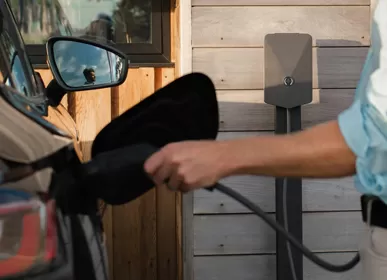
So, what is the specific mechanism behind EV charging? It is actually quite simple: when you connect your EV to a compatible charging station or household outlet using charging equipment, an electric current flows through the charging cable and into the vehicle's battery.
However, there is a catch: EV batteries require direct current (DC), whereas most power sources supply alternating current (AC). This is where the vehicle's built-in "On-Board Charger" (OBC) comes into play. This component converts AC into DC, ensuring the battery can store energy efficiently. The entire process is automated; you simply plug in and wait.
For those curious about how EV charging stations operate, the principle is as follows: they draw electricity from the grid, regulate voltage and current, and safely transfer energy to the vehicle. Some stations also support "smart charging" capabilities, optimizing power delivery based on electricity demand and available supply.
As EV charging infrastructure becomes increasingly widespread, more drivers can access reliable charging services at home, at work, and at public stations, making EV ownership more practical than ever before.
However, not all EV charging methods are the same. There are currently four main levels of charging options, differing in charging speed and power output:
Level 1 charging is the slowest but most accessible method. This involves the charging equipment that comes standard with the EV. It delivers approximately 2–3 kW of power, typically adding about 10 kilometers of driving range per hour.
This method is ideal for overnight charging or for drivers with modest daily driving needs, as you can simply plug the vehicle in at home and charge it while you sleep. Level 1 charging requires no special installation—it is essentially "plug-and-play"—making it a convenient entry-level option for new EV owners.
Level 2 charging offers significantly higher speeds (with power outputs of 7–11 kW or more), adding 50 kilometers or more of driving range per hour.
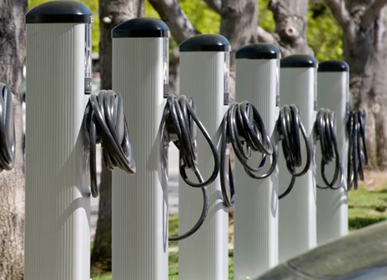
So, what exactly is a Level 2 EV charger? Examples include wall-mounted charging units (wall-boxes) installed in homes, as well as public charging stations found at shopping malls, hotels, or office buildings.
Installing a Level 2 charger at home typically requires an electrician to set up the appropriate outlet or wall-mounted unit; however, once installed, it provides a reliable solution for daily charging needs.
Integrated DC charging stations combine functions such as charging modules, control systems, metering and billing, and communication into a single unit. They can flexibly control the charging process based on vehicle requirements, meeting DC fast-charging needs across various scenarios. Unlike Level 1 and Level 2 methods—which use AC power and rely on the vehicle's onboard charger (OBC)—DC fast charging delivers direct current (DC) straight to the battery, drastically reducing charging times.
Integrated DC fast-charging stations can deliver power outputs ranging from 40 to 300 kW (or even higher), adding approximately 200 to 300 kilometers of range in just 20 to 30 minutes.
Split-system charging systems are now widely used. These systems utilize a shared power pool composed of multiple charging modules, enabling dynamic power allocation. They can be configured with various types of charging terminals to meet the needs of electric vehicles with voltage ranges from 50V to 1000V, offering a more flexible and reliable charging experience while better meeting demand. Common power specifications for these group-charging systems include 240 kW and 480 kW; users can also select power pool equipment with capacities reaching 720 kW, 960 kW, 1200 kW, 1440 kW, or higher, depending on specific requirements. These charging stations are commonly found at highway rest areas, gas stations, and other high-traffic locations, making them ideal for long-distance travel and quick top-ups. For instance, DC charging stations are becoming increasingly common at rest stops along major highways...
Now that we have covered the four charging levels, the key question is: exactly how long does it take to charge an electric vehicle? In reality, charging time varies depending on the charger type and the vehicle's battery capacity:
This method adds approximately 10 kilometers of range per hour. For a small electric vehicle with a 30 kWh battery, charging to 80% capacity might take 8 to 12 hours (often done overnight). Conversely, for a large electric vehicle with a 60–70 kWh battery, charging from empty to full could take 15–20 hours or even longer.
If you need a faster charging solution, Level 2 charging adds between 20 and 130 kilometers (or more) of range per hour. Using a standard 7 kW home wallbox or a public charging station, a mid-sized electric vehicle (with a 40–50 kWh battery) takes about 4–5 hours to reach 80% charge, or roughly 6–8 hours for a full charge.
For large electric vehicles (e.g., those with 70–80 kWh batteries), reaching an 80% charge might take 8–10 hours, yet this can still easily be accomplished overnight. This means you can plug in after returning home from get off work and wake up the next morning to a vehicle that is essentially fully charged.
Need a faster top-up? A brief stop at an integrated DC charging station—with power outputs ranging from 40 to 300 kW (or higher)—can typically boost the battery from a low state to 80% in just 20 to 40 minutes. Specifically, if you drive an electric vehicle with a small battery capacity, it might take less than half an hour to charge to 80%. An electric vehicle with a large battery capacity might require nearly an hour to reach the same level at the same charging station; however, using an ultra-fast charging station (with a power output of 300 kW or higher) would result in faster charging speeds (provided your vehicle supports that power level).
The power unit is the core component of split-system DC charging systems used at public charging stations and other locations requiring multiple fast-charging dispensers. By decoupling AC/DC (AC-to-DC conversion) and DC/DC (DC voltage conversion) modules, the power unit utilizes power capacity more efficiently and supports integration with DC energy storage systems (ESS).
An innovative DC bus architecture enables superior charging performance, exceptional quality, and flexible system layout. With split-system DC charging units ranging from 240 kW to 720 kW (or even higher), it typically takes only 10 to 30 minutes to charge a battery from near-depletion to 80%.
The system operates at noise levels below 50 dB*, ensuring a quiet and efficient charging experience. Additionally, the liquid cooling system extends the equipment's service life to over 10 years, while the annual module failure rate remains below 0.5%*.
The larger the battery capacity, the longer the charging time required. When using the same charging unit, a vehicle equipped with a 70 kWh battery will take longer to charge than one with a 30 kWh battery. Furthermore, the State of Charge (SoC)—the battery's current remaining energy level—also affects charging speed. Most electric vehicles charge relatively quickly between 0% and 80% SoC, but charging speeds slow down significantly beyond 80% to protect battery health.
Even when connected to a high-power DC charging unit, an electric vehicle's actual charging speed is limited by its onboard charging capabilities. For example:
Some electric vehicles may only accept a DC charging power of 50 kW, even when connected to a 150 kW charging station. Similarly, an electric vehicle equipped with a 7 kW onboard charger cannot draw higher power from an 11 kW AC charging station; its charging power will remain capped at 7 kW.
Temperature plays a crucial role in charging efficiency. EV batteries perform best within an optimal temperature range (approximately 20–25°C). If the environment is too hot or too cold, the vehicle's Battery Management System (BMS) intervenes to protect the battery from overheating or freezing, which can result in slower charging speeds.
You now have a solid understanding of EV charging and how it works. Whether you are charging at home or using public fast-charging stations, knowing the different charging types and the time required for each will help you plan your charging schedule more efficiently.
If your daily commute is short, home-based Level 1 charging is sufficient; however, if you require faster charging for your daily needs, you can install a Level 2 AC charger at home or use public charging stations. For those who frequently travel long distances and prioritize rapid energy replenishment, planning your trips around DC fast-charging networks is the ideal choice!
p r e v
 English
 Deutsch
 Español
 italiano
 русский
 português
 Svenska
 العربية
 Nederland
 norsk
norsk français