A CCS 2 EV charger is a key DC fast charging solution for electric vehicles using the CCS2 charging interface. As EV adoption grows, charger manufacturers, fleet operators, charging network developers, and EVSE distributors need connectors that support safe power transmission, stable communication, long service life, and outdoor reliability.
According to the International Energy Agency, global electric car sales exceeded 20 million units in 2025, accounting for about 25% of total car sales. The IEA also reported that more than 1.3 million public charging points were added globally in 2024. These numbers show why reliable CCS2 charging hardware is becoming more important for commercial EV charging projects.
As a one-stop EV charging solutions manufacturer, AUPINS provides CCS2 charging connectors, EV charging cables, adapters, sockets, and related components for OEM/ODM projects and charging infrastructure partners.
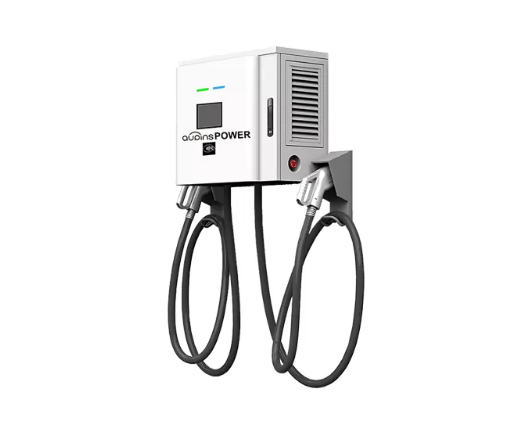
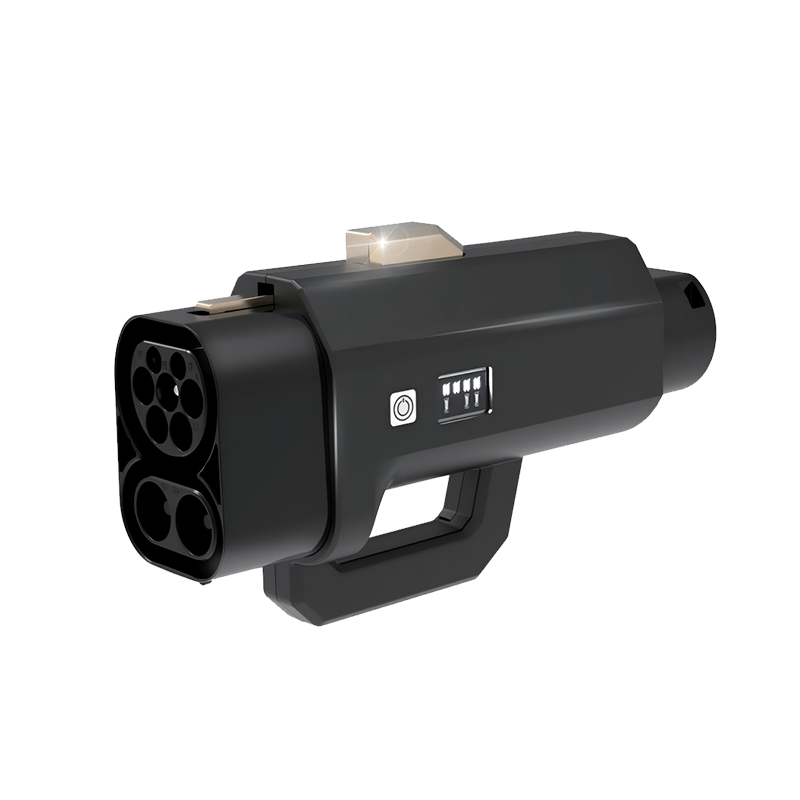
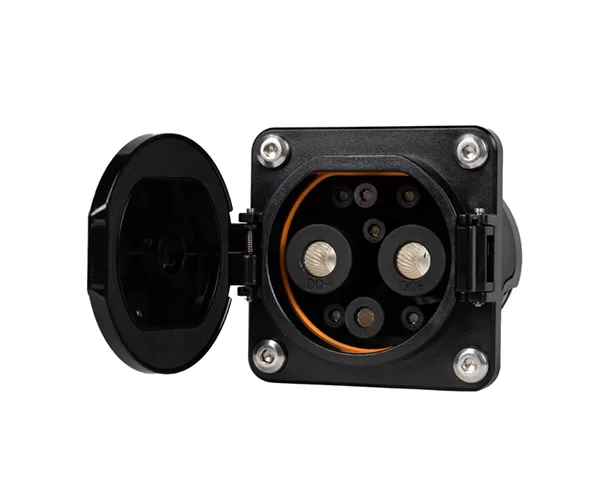
A CCS 2 EV charger is a charging system that uses the Combined Charging System Type 2 interface to deliver DC fast charging for compatible electric vehicles. CCS stands for Combined Charging System. CCS2 is based on the Type 2 charging design and adds two larger DC power pins below the upper AC and communication section. This structure allows EVs with CCS2 inlets to receive high-power DC charging from public, commercial, and fleet charging stations. For B2B buyers, selecting a CCS2 EV charger is not only about connector shape. It also involves rated voltage, current level, cable material, locking design, heat control, certification, and compatibility with local charging standards. AUPINS offers a CCS2 Low Current DC EV Charging Connector with 1000V DC rated voltage and 32A, 50A, and 80A current options. It is suitable for compact DC chargers, movable DC charging equipment, light commercial EV charging, and customized lower-current DC charging applications.
For buyers who need a clearer understanding of the charging standard, the CharIN CCS Specification explains the role of the Combined Charging System as a global charging standard for battery electric vehicles. This makes CCS2 especially relevant for EV charger manufacturers, charging network operators, and infrastructure developers serving international markets.
CCS2 is important because it supports standardized DC fast charging and helps operators build more interoperable EV charging networks. As public charging networks expand, charging connectors must handle repeated plugging, outdoor exposure, cable bending, temperature changes, and daily user operation. A poor-quality connector may cause overheating, unstable contact, locking failure, or charger downtime.
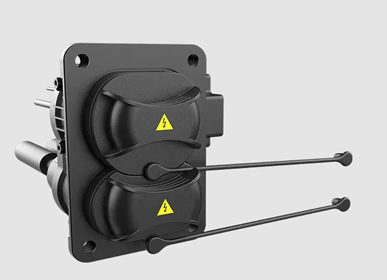
The AUPINS CCS2 Low Current DC EV Charging Connector is designed with a heat dissipation structure, built-in switch, electronic lock module, and locking bayonet anti-loosening device. Its technical data includes more than 500MΩ insulation resistance, less than 50K terminal temperature rise, 3000V withstand voltage, IP55 protection, and more than 10,000 no-load plug-in/pull-out cycles. These performance numbers are useful for charger manufacturers and project buyers because they help evaluate safety, durability, and long-term operating reliability.
A CCS2 EV charger differs from Type 2, CCS1, and GB/T in connector structure, charging type, target market, and infrastructure compatibility. Type 2 is mainly used for AC charging in Europe and many IEC-based markets. CCS2 adds two DC pins to the Type 2 structure, enabling DC fast charging. CCS1 is more common in North America, while GB/T is widely used in China’s EV charging ecosystem.
| Charging Interface | Common Charging Type | Main Market Use | Buyer Consideration |
| Type 2 | AC charging | Europe and IEC-based markets | Suitable for home, workplace, hotel, and destination charging |
| CCS2 | DC fast charging | Europe and many international markets | Suitable for public DC chargers, fleet depots, and commercial EVSE projects |
| CCS1 | DC fast charging | North America and related markets | Selected for vehicles with CCS1 inlets |
| GB/T DC | DC fast charging | China and GB/T-based platforms | Required for GB/T-compatible EVs |
| CCS2 to GB/T Adapter | DC adapter use | Cross-standard charging scenarios | Helps CCS2 vehicles access GB/T DC charging stations |
The European Commission’s Alternative Fuels Infrastructure guidance highlights the importance of charging infrastructure deployment, interoperability, transparent pricing, payment options, and user information. For B2B buyers, this means connector selection should support not only electrical performance but also long-term infrastructure compatibility and user-friendly operation.
Buyers should check rated voltage, current capacity, mechanical life, IP protection, cable material, operating temperature, certification, customization options, and supplier support.
A CCS2 connector is a safety-critical part of an EV charger. It must maintain stable contact resistance, control heat rise, resist dust and water, and remain easy to handle after repeated daily use. For commercial charging stations, a low-quality connector may increase maintenance cost and reduce customer satisfaction. The AUPINS CCS2 Low Current DC EV Charging Connector supports 1000V DC and 32A, 50A, or 80A current options. It uses XLPO insulation and TPU sheath materials for aging resistance, bending performance, and wear resistance. Its operating temperature range is -30°C to +50°C, making it suitable for many outdoor charging environments.
Mechanical durability is also important. AUPINS lists more than 10,000 no-load plug-in/pull-out cycles, 1 m drop resistance, and 2 t vehicle run-over pressure resistance. These figures are especially valuable for fleet depots, parking lots, public chargers, and rental charging equipment.
Customization also matters for OEM/ODM buyers. AUPINS supports regular 5 m cable length and custom cable length, with grey, white, black, and custom color options. Buyers can also discuss logo, packaging, and project-specific technical matching through the AUPINS Contact Us page.
AUPINS is suitable for CCS2 EV charging connector projects because it provides EV charging product manufacturing, OEM/ODM customization, technical support, and one-stop sourcing. A complete EV charging project may require charging connectors, charging cables, sockets, adapters, electrical protection devices, contact pins, high-voltage wiring harnesses, and charger-related components. Working with a supplier that understands the full charging system can reduce communication cost and improve product consistency. AUPINS provides flexible EV charging solutions for charger brands, distributors, and infrastructure integrators. Its CCS2 connector product is CE/TUV certified, and the company supports customized solutions for different commercial charging scenarios.
A CCS 2 EV charger is an important solution for DC fast charging infrastructure, especially in markets that use Type 2 and IEC-based charging standards. For charger manufacturers, EVSE distributors, fleet operators, and charging project integrators, the right CCS2 connector can improve charging safety, reduce downtime, and support better user experience. When comparing CCS2 EV charger connectors, buyers should evaluate voltage, current, insulation resistance, temperature rise, mechanical life, IP rating, cable material, certification, customization, and supplier support. AUPINS provides CCS2 charging connectors and related EV charging components for OEM/ODM projects, helping commercial buyers build safer and more reliable EV charging solutions.
CCS 2 means Combined Charging System Type 2. It is a DC fast charging interface based on the Type 2 design, with two additional DC power pins for faster charging.
No. Type 2 is mainly used for AC charging, while CCS2 adds DC pins to support DC fast charging. Some EVs with CCS2 inlets can support both AC and DC charging.
CCS2 is widely used by many electric vehicles in Europe and other IEC-based markets, including passenger EVs, commercial EVs, and fleet vehicles.
The AUPINS CCS2 Low Current DC EV Charging Connector offers 32A, 50A, and 80A rated current options, with 1000V DC rated voltage.
IP55 protection helps resist dust and water exposure. This is important for outdoor EV charging stations, parking lots, fleet depots, and commercial chargers.
Choose a supplier with reliable specifications, certification, quality control, customization ability, and technical support. For OEM/ODM projects, experience in connector design, cable materials, heat control, and charging system compatibility is especially important.
n e x t
 English
 Deutsch
 Español
 italiano
 русский
 português
 Svenska
 العربية
 Nederland
 norsk
norsk français