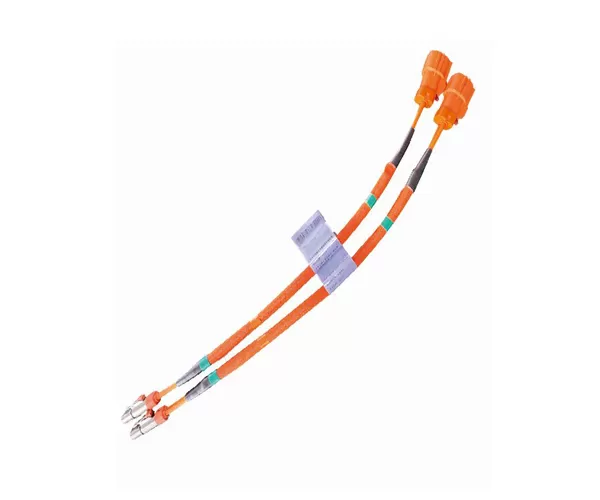
Electric vehicle battery charging is a relatively complex process. During the charging process, electrical energy is converted into chemical energy to form material accumulation at the positive and negative poles of the battery.
Due to the structural characteristics of the battery, in the process of charging, as the battery power continues to increase, the voltage across the positive and negative terminals of the battery also increases. The size of the charging current is determined by the voltage difference between the output voltage of the charger and the battery voltage, which is called It is the charging voltage difference.
Since the overall resistance of the battery pack is relatively small, if the charging voltage is fixed, in the early stage of battery charging, the battery voltage is low and the charging voltage difference is large. At this time, the charging current will be very large, which will cause the battery to overheat or even damage the battery.
After the battery power continues to rise, the battery voltage gradually increases, and the charging voltage difference continues to shrink, resulting in a small charging current that cannot meet the charging requirements. Therefore, this requires a reasonable charging arrangement for the charging process of electric vehicles.
Electric vehicle charging process:
The charging process of the battery can usually be divided into pre-charging, fast charging, supplementary charging, and trickle charging.
When charging a battery that has not been used for a long time or a new battery, using fast charging from the beginning will affect the life of the battery. Therefore, this kind of battery should be charged with a small current first to make it meet certain charging conditions. This stage is called pre-charging.
The electric vehicle fast charging is to charge with high current to quickly restore battery power. The fast charging rate is generally above 1C, and the fast charging time is determined by the battery capacity and charging rate. Fast charging is divided into two types: constant current charging and pulse charging. Constant current charging is to charge the current with a constant current. Pulse charging is to first charge the battery with a pulsed current, then let the battery discharge, and so on.
With some fast charge termination methods, the battery is not fully charged after fast charge termination. In order to ensure that 100% of the power is charged, a supplementary charging process should also be added. The supplementary charging rate generally does not exceed 0.3C.
During the supplementary charging process, the temperature will continue to rise, and when the temperature exceeds the specified limit, the charger switches to the trickle charging state. In order to ensure that the battery is not overcharged, a comprehensive control method of timing control, voltage control and temperature control can be used.

 English
 Deutsch
 Español
 italiano
 русский
 português
 Svenska
 العربية
 Nederland
 norsk
norsk français