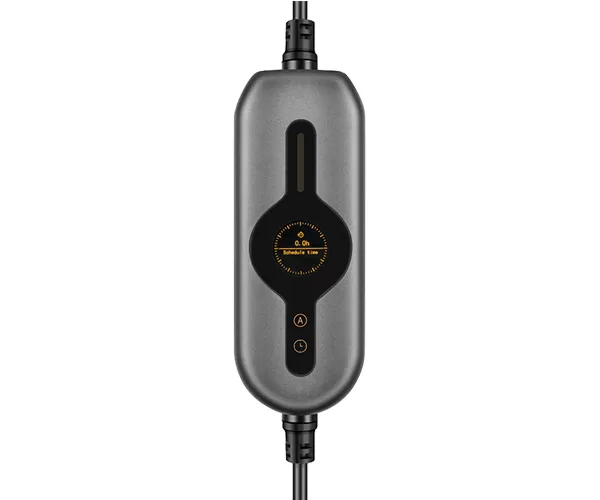
As electric vehicles become the standard for transportation, understanding your charging equipment is vital for maximizing convenience, safety, and charging speed. At AUPINS, we believe the EV charging cable is the most critical link between your vehicle and the power source. Choosing the correct cable ensures seamless integration with your lifestyle and local infrastructure.
The first step in selecting the right EV charging cable is identifying whether your needs require AC or DC charging, as these utilize fundamentally different connectors.
AC Charging Cables: These are primarily used for slower charging at home or public Level 2 stations. AUPINS offers various AC solutions including the Type 2 EV Charging Cable, which is the European standard, and several Chinese GB/T AC Straight Charging Connectors (for the pile end power plug or the vehicle charging plug). We also support specific standards like the SAE AC Charging Connector and advanced bidirectional options like the 10/16A V2L Charging Cable for vehicle-to-load functionality.
DC Charging Cables: These are used for rapid, high-speed charging at public Level 3 stations. Our DC offerings include the major global standards: CHAdeMO DC Charging Cable, GB/T DC Charging Connector, and the NACS Vehicle Plug (a standard adopted by many North American vehicle manufacturers).
Compatibility is dictated by matching the connector type on your cable to the port on your vehicle and the charging station. AUPINS EV charging cables cover a wide spectrum of international standards to ensure a perfect fit every time.
Safety is paramount, especially when dealing with high-power DC systems. Our cables adhere to strict international compliance standards, such as EN50620 EV Charging Cables, which governs construction, performance, and safety requirements. Our materials are chosen for premium durability and resistance to abrasion and environmental factors, protecting the high-quality internal copper conductors and ensuring the longevity of the charging system.
Beyond the connector type, selecting the correct cable specification is essential for optimizing charging performance. Key factors include:
Cable Type (Open End): We offer Type 2 Open End Charging Cable options, giving customers flexibility for custom installation or integration into specific charging hardware.
Power Handling: The cable must be rated to handle the maximum current and voltage of your charging point and vehicle. Using an undersized cable can cause overheating and slow charging speeds.
Physical Durability: A quality EV charging cable must withstand heavy use, extreme temperatures, and constant coiling/uncoiling. AUPINS cables feature robust sheathing that resists oil, water, and impact, ensuring reliable performance in all weather conditions.
The AUPINS EV charging cable is engineered to provide the optimal balance of compatibility, speed, and safety for every EV owner.
 English
 Deutsch
 Español
 italiano
 русский
 português
 Svenska
 العربية
 Nederland
 norsk
norsk français