A dual-gun DC charger allows two vehicles to connect to one charging unit, but two connectors do not automatically mean that both vehicles receive the charger's full rated power. For charging network operators, fleet managers and project developers, the key factors are total output, per-port power and simultaneous charging capability. Understanding these differences helps prevent inaccurate capacity estimates and supports better equipment selection.
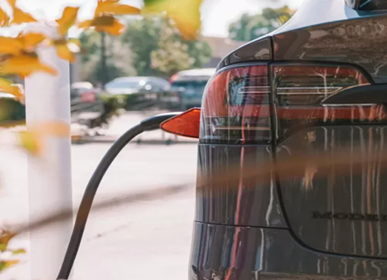
Total power is the maximum combined DC output of a charger, while per-port output is the power available to an individual vehicle under a specific operating condition. These figures describe different aspects of a dual-gun DC charger and should be compared separately.
For example, a charger rated at 400 kW does not necessarily deliver 400 kW to each connected vehicle. If 400 kW is the unit's maximum combined output, the available power may be allocated between the two ports according to its design and control strategy. Vehicle battery temperature, state of charge and maximum charging acceptance can further limit actual delivery.
When reviewing specifications, confirm whether the rating refers to the whole unit, one port operating alone or both ports charging simultaneously. AUPINS' wall EV charger product page is a relevant starting point for reviewing the EF400 Series and its published power configurations.
Simultaneous charging means that two vehicles can charge at the same time, while power sharing determines how the charger's available output is allocated between them. Two active charging sessions may receive equal or unequal power depending on the equipment's supported modes.
| Example dual-port output | Combined output | What operators should verify |
|---|---|---|
| 120 kW + 120 kW | 240 kW | Whether both vehicles can accept 120 kW |
| 160 kW + 160 kW | 320 kW | Whether the site supports the required load |
| 200 kW + 160 kW | 360 kW | Whether asymmetric power allocation is supported |
| 200 kW + 200 kW | 400 kW | Whether the selected model supports this mode |
These figures illustrate how power allocation works; they do not guarantee that every charger supports every combination. Confirm the exact output modes in the manufacturer's datasheet before specifying a unit.
This distinction matters at highway service areas, urban charging hubs and fleet depots. A dual-gun charger can serve two vehicles through one charging unit, but real throughput depends on charging duration, vehicle demand, power sharing and how often both ports are occupied. Buyers comparing equipment can also review AUPINS' article on types of public EV chargers to understand how public charging options fit different site requirements.
The right dual-gun DC charger matches its supported output modes to vehicle charging limits and the site's available electrical capacity. Selecting equipment by its headline kilowatt rating alone can lead to inaccurate performance estimates and undersized infrastructure.
A vehicle may be unable to accept the maximum power available from a charger because of its battery design, temperature or state of charge. The site must also accommodate the charger's AC input requirements, conversion losses and other electrical loads. A qualified electrical designer should assess the supply, distribution equipment, protection and cable sizing before installation.
The International Energy Agency reported that more than 1.3 million public charging points were added globally in 2024, bringing the worldwide public stock to more than 5 million. Its Global EV Outlook 2025 analysis of electric vehicle charging provides context for the continued expansion of charging infrastructure.
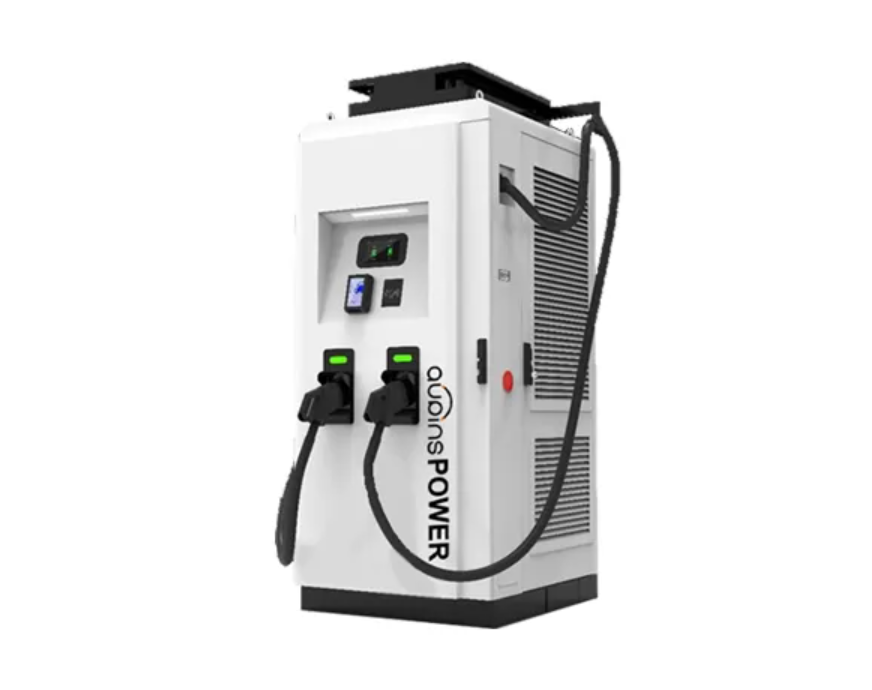
A complete dual-gun DC charger specification should state total rated output, single-port output, simultaneous power combinations, input requirements and connector compatibility. Clear requirements help suppliers compare suitable configurations and prepare more accurate quotations.
When evaluating AUPINS equipment, confirm the exact EF400 model, supported dual-port modes, connector type, voltage and current ranges, communication functions and protection requirements. Do not assume every output combination is available on every model or that maximum power can be sustained under all operating conditions.
The IEC 61851-23 standard for DC electric vehicle supply equipment is an important international reference for reviewing DC charging equipment requirements. Project teams should verify the applicable standard edition, local regulations and model-specific compliance documentation before installation.
Connector and cable requirements also need to match the charging application. For projects using compatible CCS2 interfaces, AUPINS' CCS2 charging cable product page can help buyers review a related component. Check its rated current, connector configuration and intended use against the selected charger and vehicle requirements.
For a quotation, provide the expected vehicle types, number of charging ports, target output per vehicle, expected simultaneous usage, site power availability and connector requirements. These details give the supplier a practical basis for assessing whether the proposed configuration fits the project's operational needs.
Where vehicle-to-charger communication is relevant, the ISO 15118-20 communication standard provides further technical context. Its relevance depends on the communication functions required for the specific charging project.
A dual-gun DC charger should be evaluated by total output, per-port power and simultaneous-charging behavior. A 400 kW rating does not mean each connected vehicle receives 400 kW; actual delivery depends on the charger's configuration, vehicle acceptance and site conditions. By verifying supported power-sharing modes and electrical requirements against the project brief, operators can compare equipment more accurately. AUPINS' DC charging solutions provide a starting point for evaluating configurations against specific fleet and site needs.
Not necessarily. The 400 kW figure may describe the charger's combined output. Per-port delivery depends on the supported operating mode and each vehicle's charging limits.
Yes, if the charger supports simultaneous operation. The available power for each vehicle depends on the charger's design and configuration.
Total power is the maximum combined output of the charger. Per-port output is the power available to one vehicle under a particular operating condition.
No. Equal sharing may suit vehicles with similar needs, while asymmetric allocation can be useful when vehicles have different charging limits or energy requirements.
Factors include charger configuration, vehicle acceptance limits, battery temperature, state of charge and available site power.
Request the datasheet, total and per-port output ratings, simultaneous power-sharing modes, input requirements, connector options, communication features and applicable conformity documentation.
 English
 Deutsch
 Español
 italiano
 русский
 português
 Svenska
 العربية
 Nederland
 norsk
 français