Choosing the right DC charger power for a fleet depot means balancing vehicle availability, daily energy demand, charging windows and electrical infrastructure. A 60 kW unit may suit vehicles parked for several hours, while 150, 180 or 240 kW equipment may be more appropriate when vehicles must return to service quickly. The best option is not automatically the highest-rated charger; it is the configuration that meets operational needs without unnecessary infrastructure cost.
DC charger power is the maximum rate at which charging equipment can deliver direct current to a vehicle, subject to the charger’s rating and the vehicle’s acceptance limit. Fleet operators should size chargers around the energy each vehicle needs and the time available to deliver it.
Use this screening formula:
Required average power (kW) = energy required (kWh) ÷ available charging time (hours).
For example, delivering 120 kWh within two hours requires an average of 60 kW. Delivering the same energy in one hour requires an average of 120 kW. These are simplified calculations; actual sessions may take longer because charging power varies with battery state of charge, temperature, vehicle capability and system losses.
Before choosing equipment, record each vehicle’s daily energy use, arrival and departure times, battery and connector specifications, and the number of vehicles that may charge simultaneously. A fleet with predictable overnight parking has different requirements from delivery vehicles that return briefly between routes.

A 60, 150, 180 or 240 kW DC charger offers a different balance of charging speed, site demand and vehicle throughput. The table below compares rated power and idealized energy delivery over 30 minutes; real output may be lower.
| Rated power | Theoretical energy in 30 minutes | Potential fleet-depot fit |
|---|---|---|
| 60 kW | 30 kWh | Longer parking windows and moderate daily energy needs |
| 150 kW | 75 kWh | Fleets with shorter scheduled charging windows |
| 180 kW | 90 kWh | Higher utilization and tighter vehicle turnaround |
| 240 kW | 120 kWh | High-demand operations where vehicles and site infrastructure support high-power charging |
These figures assume constant output at rated power for the full 30 minutes. They are comparison estimates, not promises of delivered energy. A vehicle limited to 100 kW will not receive 150–240 kW from a higher-rated charger, and its charging curve may reduce power during the session.
The International Energy Agency’s Global EV Outlook provides global analysis of electric-vehicle adoption and charging developments. Use such market context alongside your own route schedules and measured energy consumption rather than using market growth alone to determine charger size.
Fleet charging demand is the total energy vehicles need within a defined operating period, while grid capacity determines how much power the depot can safely and practically draw. Both must be assessed together: a high-power charger may shorten individual sessions, but multiple units operating at full output can create a substantial site load.
For example, four 150 kW chargers operating simultaneously could demand up to 600 kW of combined charger output. Four 240 kW units could reach 960 kW. Actual site input requirements depend on equipment efficiency and auxiliary loads, while the building’s existing demand must also be considered. A qualified electrical professional should verify transformer capacity, service limits, protection, cabling, earthing and applicable local requirements.
Load management can help coordinate charging around departure deadlines and reduce simultaneous peak demand. If vehicles remain parked for long periods, distributing charging across the available window may be more cost-effective than specifying the maximum power for every parking bay.
Connector compatibility is another essential check. Review the relevant DC charger types, verify whether vehicles require a CCS2 EV charger, and confirm connector requirements against the fleet’s actual vehicles. The IEC 61851 series covers conductive charging systems for electric vehicles; confirm the applicable standard and edition for the intended equipment and market.
A fleet DC charger specification is the documented set of power, compatibility, safety, communication and installation requirements used to select equipment. A complete specification helps suppliers quote comparable systems and reduces the risk of choosing equipment that cannot meet the depot’s operating needs.
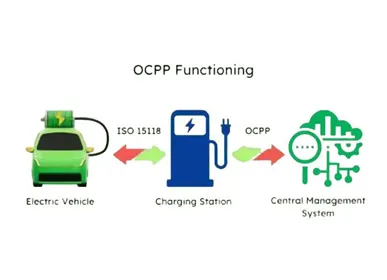
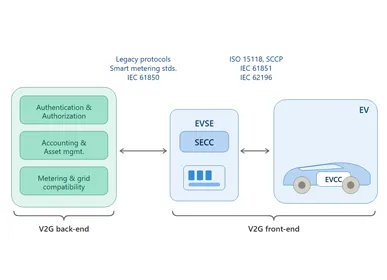
Confirm vehicle-side maximum charging power, connector type, operating environment, cable handling, communications, remote monitoring, payment or access control, service support and planned expansion. For communication requirements, review the ISO 15118-20 standard and verify which functions are supported by the vehicle and charger; do not assume every unit supports every feature.
AUPINS can help fleet operators compare DC charging configurations against vehicle specifications, charging schedules and site constraints. Before requesting a quotation, prepare a vehicle list, typical daily energy requirement, busiest return window, expected simultaneous charging count and available electrical capacity. These inputs make it easier to compare 60, 150, 180 and 240 kW options on operational fit rather than headline power alone.
The right DC charger power for a fleet depot depends on how much energy vehicles need, how long they remain parked, how many charge at once and what the site’s electrical system can support. Use 60 kW as a candidate for longer charging windows, and evaluate 150, 180 or 240 kW where faster turnaround justifies the additional power. Validate the choice against vehicle limits, measured demand and expansion plans before finalizing equipment.
It may be sufficient when vehicles have long charging windows and moderate energy requirements. Calculate required energy per vehicle and available charging time before deciding.
Not automatically. Compare vehicle acceptance rates, session timing, cost and site capacity to determine whether the extra rated power will be useful.
Consider them when vehicles need substantial energy in short windows and both the vehicles and electrical infrastructure can support high-power charging.
No. The vehicle’s maximum DC charging rate and battery conditions limit the power it can accept.
The number depends on fleet size, energy demand, arrival patterns, charging-window length and simultaneous charging needs. Model peak periods, not just daily totals.
Yes. Charging schedules and power allocation can limit simultaneous demand, provided the system still delivers the energy vehicles need before departure.

 English
 Deutsch
 Español
 italiano
 русский
 português
 Svenska
 العربية
 Nederland
 norsk
 français