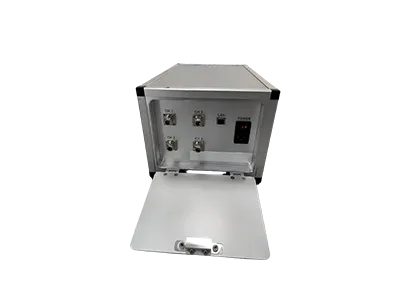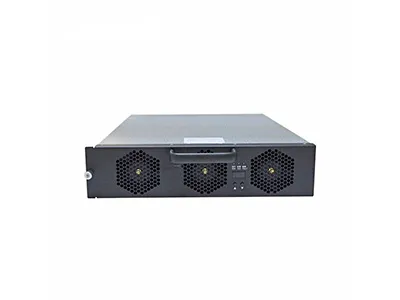
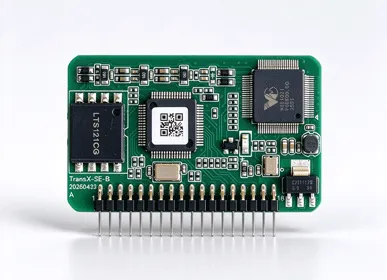
In an era where electric mobility and smart charging technologies are deeply intertwined, the dimensions of industry competition are undergoing a fundamental shift. True core competitiveness no longer lies merely in battery capacity or charging speed, but in interoperability—the ability of electric vehicles (EVs) to communicate seamlessly with any charging infrastructure worldwide. The Electric Vehicle Communication Controller (EVCC) serves as the pivotal hub enabling this seamless connectivity. Valued at $753 million in 2024, the global EVCC market is projected to grow at a compound annual growth rate (CAGR) of 14.6%, surpassing $2.83 billion by 2034. However, viewing the EVCC merely as a communication interface underestimates its strategic value; it acts as a digital system coordinator, bridging two-way communication between the vehicle, charging infrastructure, and the smart grid.
Our EVCC solutions manage complex multi-protocol stacks, supporting major international standards such as ISO 15118, DIN 70121, GB/T 27930, and SAE J1772. Functioning as a high-fidelity protocol conversion gateway, it ensures smooth interaction between vehicles using different communication standards and any charging station globally—whether the vehicle utilizes the GB/T CAN protocol or the PLC communication protocol found in European and American CCS systems. By enabling advanced features like Plug & Charge (PnC) and High-Level Communication (HLC), we eliminate user friction. PnC technology transforms the charging experience from a cumbersome process of "inserting cards, scanning codes, and manual activation" into a seamless, intelligent interaction of "plug-and-charge with automated billing." Furthermore, with robust built-in cybersecurity and PKI-based authentication mechanisms, every charging session is safeguarded against escalating digital threats. Our solution also meets ISO 26262 ASIL B functional safety requirements, providing a solid foundation for automotive-grade applications.
Beyond basic communication control, the EVCC enables a wide range of value-added services. It enables real-time coordination with the Battery Management System (BMS) for monitoring, dynamic load balancing, and encrypted authentication. This not only enhances the safety of electric vehicles but also makes them smarter, preparing them for bidirectional energy trading—such as Vehicle-to-Grid (V2G) and Vehicle-to-Home (H2H) applications. Leveraging native support for bidirectional charging under the ISO 15118-20 standard, we help your fleet transform from a mere energy consumer into an active node in the energy market, turning stored electricity into a monetizable asset. By combining smart energy management with demand response capabilities, our solution optimizes total cost of ownership while strongly supporting global decarbonization goals.
As the industry accelerates its transition toward Software-Defined Vehicles (SDVs), our EVCC supports Over-the-Air (OTA) updates, ensuring your investment remains future-proof against evolving regulatory requirements and cybersecurity challenges. With a modular architecture and automotive-grade reliability—supporting an operating temperature range of -40°C to +85°C and an IP67 protection rating—we provide a robust foundation for your next-generation EV platforms. The solution integrates seamlessly with cloud-based fleet management systems to enable remote diagnostics and predictive maintenance, turning every EVCC into an "evolving intelligent core" that confidently meets the EU's mandatory ISO 15118-20 compliance requirements starting in 2027.
Let us drive together toward a future of sustainable mobility—one that is seamless, secure, and commercially valuable.

 English
 Deutsch
 Español
 italiano
 русский
 português
 Svenska
 العربية
 Nederland
 norsk
norsk français