
Commercial EV charging projects require more than selecting the highest available power rating. Parking duration, vehicle compatibility, electrical capacity and installation costs all influence the right specification. For property developers, facility managers and charging operators, comparing 7, 11 or 22 kW AC wallbox chargers helps balance charging performance with infrastructure investment.
AC wallbox chargers supply alternating current to electric vehicles, which use onboard chargers to convert it into battery-compatible direct current. Their practical charging output depends on the wallbox rating, vehicle capability and available electrical supply.
| Charger rating | Typical electrical supply | Approximate rated current | Potential applications |
|---|---|---|---|
| 7 kW | Single-phase, 230 V | 32 A | Long-stay parking and residential-style facilities |
| 11 kW | Three-phase, 400 V | 16 A per phase | Offices, hotels and destination parking |
| 22 kW | Three-phase, 400 V | 32 A per phase | Commercial sites with higher AC charging demand |
These are typical nominal configurations, not universal requirements. Actual electrical conditions and equipment specifications must be checked during project design. A vehicle limited to 7.4 or 11 kW AC will not charge faster simply because it connects to a 22 kW wallbox.
For market context, the IEA Global EV Outlook 2025 examines EV adoption and charging infrastructure developments that can inform long-term commercial charging plans.
Parking duration determines how much energy a vehicle can receive during its stay and whether a higher-power charger offers practical value. The right rating depends on expected energy demand, average dwell time and the charging capability of vehicles using the site.
For example, eight hours at a constant rated output would theoretically provide 56 kWh from a 7 kW charger, 88 kWh from an 11 kW charger, or 176 kWh from a 22 kW charger. These are theoretical figures, not guaranteed battery energy: conversion losses, charging curves, temperature and vehicle limits can reduce actual delivery.
Understanding 7 kW charging speed helps project teams determine whether lower-power charging is sufficient for vehicles parked overnight or throughout a working day.
For offices and hotels, 7 or 11 kW units may cover many long-stay needs. Fleet or destination locations with higher energy turnover may benefit from 22 kW equipment when compatible vehicles are expected. A mixed-power layout can serve different parking patterns without installing the highest-rated charger at every bay.
Electrical capacity planning estimates the combined load from EV chargers alongside the building's existing electricity demand. A project's total charger rating should therefore be evaluated against the supply capacity, peak demand and potential for intelligent load management.
For example, ten 22 kW chargers represent up to 220 kW of connected charging load if all operate at full output simultaneously. That does not mean the site will always draw 220 kW, but it illustrates why charger quantities and operating scenarios must be assessed before procurement.
Dynamic load management can distribute available power across charging points and help keep demand within configured site limits. Its effectiveness depends on compatible control systems, accurate load monitoring and appropriate electrical design.
When evaluating an AC wall box charger, confirm rated power, voltage, phase requirements, current limits and integration options. A qualified electrical designer should also assess distribution boards, circuit protection, cable sizing, earthing and any required upgrades to the existing supply.
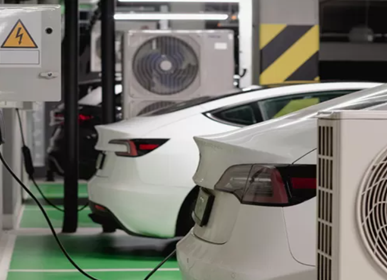
A commercial charging specification defines the electrical, safety, communication and environmental requirements that equipment must meet before installation. These details help ensure the selected charger fits the project rather than simply meeting a headline power rating.
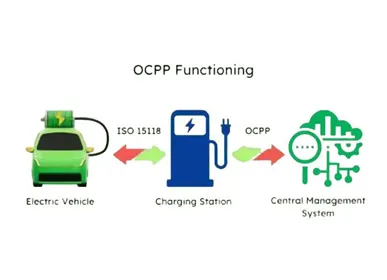
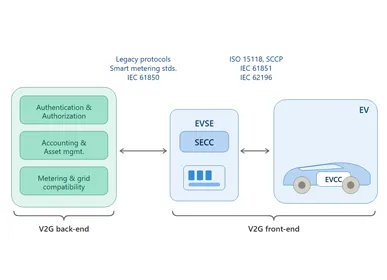
Confirm connector compatibility with the target vehicle market, enclosure protection for the installation environment, user access requirements and the need for remote monitoring or energy metering. Shared parking facilities may also require RFID authentication, network connectivity, backend integration, reporting and maintenance support.
Relevant international standards provide a starting point for technical review. The IEC 61851-1 standard addresses general requirements for conductive EV charging systems, while IEC 62196-2 covers dimensional compatibility and interchangeability requirements for AC and DC vehicle couplers and vehicle inlets within its scope. Project teams should verify the applicable editions and local regulations before purchasing equipment.
For sites requiring higher AC output, a 22 kW EV charging station may be worth evaluating, provided the vehicles and electrical infrastructure can use its capacity. AUPINS can be considered during supplier evaluation by requesting product datasheets, supported configurations, compliance documentation, warranty terms and project-specific technical support.
Choosing between 7, 11 and 22 kW AC wallbox chargers requires balancing parking duration, vehicle capability, electrical capacity and operating requirements. Lower-power units can suit long-stay parking, while higher ratings may benefit compatible vehicles with greater energy needs. Before finalizing the specification, assess simultaneous demand, safety requirements, connectivity and local compliance. This approach helps commercial project owners select appropriate equipment, manage infrastructure costs and prepare a more precise request for quotation.
No. A 22 kW wallbox can provide more power, but the vehicle must support that AC charging rate. For long-stay parking, 7 kW may be sufficient.
No. The vehicle's onboard AC charger determines its maximum AC charging rate. A lower-rated vehicle will not use the wallbox's full output.
Yes. An 11 kW charger commonly uses a three-phase, 400 V supply in markets where this configuration is standard. Always verify local supply conditions and the manufacturer's specifications.
The number depends on available electrical capacity, existing building loads, simultaneous charging demand and load management. A qualified electrical designer should determine the appropriate configuration.
Include charger quantity and power rating, supply conditions, connector requirements, communication functions, installation environment, compliance documentation, warranty and commissioning requirements.
Not necessarily. A mixed-power layout may better serve different parking durations and vehicle types. Base the configuration on usage patterns, vehicle compatibility and available site capacity.

 English
 Deutsch
 Español
 italiano
 русский
 português
 Svenska
 العربية
 Nederland
 norsk
 français