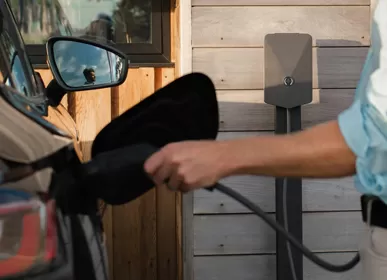
This is the most basic, convenient, and lowest-cost charging method, forming the cornerstone of electric vehicle adoption. In detached homes, owners can install private charging piles to utilize off-peak electricity at night. The main challenges lie in power capacity expansion in older residential areas and apartment buildings, and coordinating parking space ownership and property management. Solutions include promoting shared private charging piles, building public charging stations, and implementing intelligent and orderly charging in communities to alleviate installation conflicts.
AUPINS provides home EV charging solutions for electric cars, including wall-mounted home car chargers, portable EV chargers, charging cables, sockets and home car charger adapters. Whether users need a home charging station for EV cars, a compact home charger for car use, or charging accessories for different connector standards, AUPINS supports safe, convenient and scalable residential EV charging.
A home EV charging solution is a residential charging setup that allows electric vehicle owners to charge their cars at home through a wall-mounted charger, portable EV charger, charging cable, socket or adapter.
Compared with relying only on public charging stations, home charging gives EV drivers more control over daily charging time, overnight charging convenience and long-term charging accessibility. For homeowners, apartment residents, property developers and EV charger distributors, a complete home charging solution should be easy to install, safe to operate and compatible with different electric vehicle charging ports.
AUPINS supports home charging electric vehicles with AC wall-mounted chargers, portable home car chargers, EV AC charging cables, charging sockets and EV charging adapters for multiple connector standards.
A home charging station for EV cars is usually installed in a private garage, driveway, apartment parking space or residential community. It allows drivers to charge electric vehicles at home overnight or during off-peak hours, making daily EV use more convenient.
For residential users, a good home charging station for EV should offer stable charging performance, electrical protection, suitable cable length, easy operation and compatibility with the vehicle’s charging connector. For distributors and project buyers, product reliability, certifications, customization options and after-sales support are also important.
AUPINS home car charging solutions can be used for:
Private houses and garages
Apartment parking spaces
Residential communities
Villas and townhouses
EV charger retail and distribution projects
Home charging upgrade projects
Property developer EV charging installations
Choosing the right home car electric charger depends on the vehicle model, connector type, available power supply, installation space and charging speed requirement.
For most residential EV charging scenarios, an AC wall-mounted charger is a practical choice for daily use. It can be installed on a garage wall, parking wall or outdoor charging area, helping users charge their EVs conveniently at home. For users who need flexible charging, a portable EV charger can be used as a backup or mobile charging option.
AUPINS offers multiple home EV charging product options:
| Charging Need | Recommended Solution | Best For |
| Daily home charging | Wall-mounted home EV charger | Garage, driveway, fixed parking space |
| Flexible or backup charging | Portable home car charger | Travel, temporary charging, rented homes |
| Connector compatibility | Home car charger adapter | Type 1, Type 2, GB/T, Tesla, CCS, CHAdeMO compatibility |
| Cable replacement or upgrade | EV AC charging cable | Home and public charging use |
| Residential project installation | Home charging station for EV cars | Apartments, communities, property projects |
Before selecting a charger, users should confirm the home charging port for electric car compatibility, available current, required charging power and local installation requirements.
AUPINS provides EV charging products and charging accessories for different residential and commercial applications. From home car electric chargers to charging cables, adapters, sockets and connector components, AUPINS helps customers build safer and more compatible EV charging solutions.
Key advantages include:
Wall-mounted and portable home charging options
Charging cable, socket and adapter support
Compatibility with mainstream EV connector standards
Product options for residential, workplace and commercial charging
OEM/ODM support for distributors and project buyers
Support for global EV charging markets and custom requirements
Whether you are sourcing a home charger for car charging, building a residential EV charging project, or looking for charging accessories for multiple vehicle standards, AUPINS can recommend a suitable solution based on your application.
The best home charger for car charging depends on the vehicle connector, available power supply, installation location and charging speed requirement. For daily residential use, an AC wall-mounted charger is often a practical option. For flexible or backup charging, a portable EV charger may be more suitable.
Yes. A home charging station for EV cars can usually be installed in a garage, driveway or private parking space, as long as the electrical capacity, wiring protection and local installation requirements are properly checked by a qualified installer.
A home car electric charger is a charging device used to charge electric vehicles at home. It can be a wall-mounted AC charger, a portable EV charger, or a complete home charging setup with cables, sockets and adapters.
Most residential users do not need a home CCS charger. CCS charging is usually associated with DC fast charging and may require higher power infrastructure. For daily overnight charging, an AC home charger is usually more suitable.
A home car charger adapter is used to connect electric vehicles and chargers with different connector standards. It can help improve compatibility between Type 1, Type 2, GB/T, Tesla, CCS, CHAdeMO and other charging interfaces.
Yes. A portable EV charger can be used for home charging, temporary charging or backup charging, depending on the power supply, plug type and vehicle compatibility. It is useful for users who need a flexible home charge EV option without a fixed wall-mounted installation.
Common home EV charging options include portable chargers and AC wall-mounted chargers. The AUPINS C5 Series AC Wall-mounted Charger supports 7kW, 11kW and 22kW options, while the AUPINS A5 Series Portable EV Charger supports 2.3kW, 3.5kW and 7kW options.
Before buying a home charging station for EV use, check your vehicle connector type, available electrical capacity, installation location, cable length, safety protection requirements, target market standards and whether you need a fixed wall-mounted home EV charger or a portable home car charger.
Choosing the right home EV charging solution depends on charger type, installation conditions, connector compatibility, charging speed and long-term safety. To help homeowners, distributors and residential project buyers make better decisions, AUPINS provides practical EV charging guides covering charger selection, installation planning, charging cable use and adapter compatibility.
Recommended guides:
 English
 Deutsch
 Español
 italiano
 русский
 português
 Svenska
 العربية
 Nederland
 norsk
norsk français