Electric vehicle owners usually notice a phenomenon during their usage: some charging guns can replenish hundreds of kilometers of range within just a few tens of minutes, while others require an entire night to be fully charged. The fundamental reason for this difference lies in the fact that the two types of charging guns adopt completely different working modes. The following will be analyzed from three aspects: technical principle, applicable scenarios, and operation suggestions.
Slow charge via on-board charger conversion
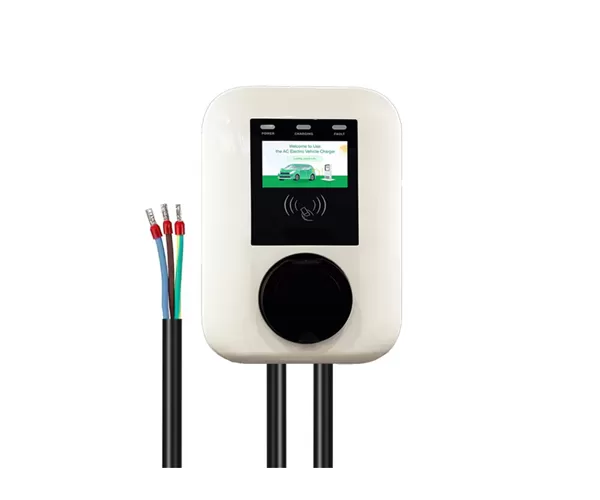
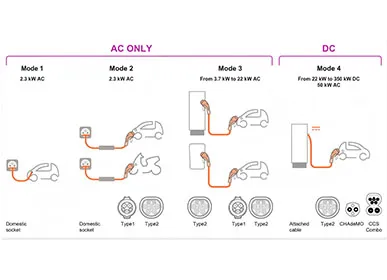
Slow charging usually refers to the charging method using an AC charging gun. The working process is as follows: The AC electricity from the grid is input into the vehicle through the charging gun, and then converted into DC electricity by the on-board charger before being charged into the battery. Due to the relatively small current, the charging power is generally below 7kW, so the charging time is longer.
The advantage of this mode lies in that the charging process has less impact on the battery and the temperature rise is more stable, which helps to extend the battery's cycle life. For daily commuting and overnight parking scenarios, AC slow charging is a solution that balances economy and battery maintenance. Most household chargers and portable charging guns adopt this mode.
DC fast charging: Inject directly bypassing the on-board charger
Fast charging corresponds to the DC charging gun. These charging guns, either internally or in conjunction with the charging stations, integrate high-power rectification modules. They can convert the alternating current from the power grid into high-voltage direct current, directly injecting it into the battery without going through the on-board charger. This design enables a significant increase in charging power. The power of mainstream fast charging stations ranges from 60kW to 120kW, and some ultra-fast charging equipment has reached over 480kW. Megawatt-level charging technology is also being developed.
High-power charging significantly reduces the charging time, and is suitable for scenarios such as mid-trip charging during long-distance travel and commercial operation vehicles. It should be noted that under the high-power mode, the battery generates more heat, posing a greater challenge to the vehicle's thermal management system. Therefore, it is not recommended to use DC fast charging as the sole charging method on a daily basis. It is more suitable as a temporary or emergency charging solution.
Differences in operations after filling
The handling methods for the two modes after charging completion are also different. After being fully charged using a DC fast charging station, it is recommended to promptly remove the charging gun and move away from the parking space to improve the turnover efficiency of public charging facilities. At the same time, it can avoid the problem of moisture or oxidation caused by the charging gun contacts remaining exposed in the outdoor environment for a long time.
After the slow charging is completed, there is no need to immediately remove the gun. Some vehicles will continue to perform battery balancing after the battery level is shown as 100%, gradually adjusting the voltages of each cell to a consistent state. This is of great significance for maintaining the consistency and long-term performance of the battery pack.
Understanding the working modes and applicable scenarios of fast charging and slow charging is helpful for making reasonable choices regarding charging methods based on actual travel needs, thereby ensuring travel efficiency while maximizing the battery's lifespan.

 English
 Deutsch
 Español
 italiano
 русский
 português
 Svenska
 العربية
 Nederland
 norsk
norsk français