A must-read for North American EV owners: One quick guide to charging connectors. Pick the wrong adapter, and your road trip might end before it starts.
The biggest fear for EV drivers isn’t range anxiety anymore — it’s pulling up to a charger and realizing the plug doesn’t fit.
North America’s charging landscape is going through a quiet war — the veteran J1772, the fast-charging workhorse CCS1, and Tesla’s rising star NACS. If you own an EV or are thinking of buying one, mixing up these standards could cost you hundreds on the wrong adapters — or worse, leave you watching an empty charger at a highway rest stop while your battery drains.
Let’s break it down: What’s the real difference between J1772 and CCS? Which one does my car use? And what connector should you look for in 2026?
Many people think J1772 and CCS are competing standards. They’re not.
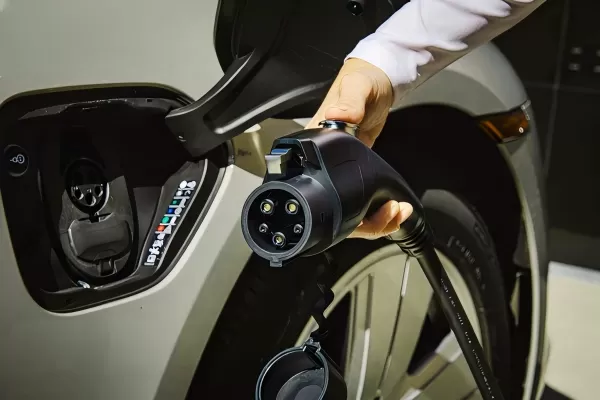
J1772 (Type 1) is the granddaddy of AC slow charging in North America — five round pins, shaped like a friendly smile. The slow chargers in your garage, office parking lot, or mall — most of them are J1772. Max power: 19.2 kW. Charge overnight, full in the morning.
CCS1 (Combo 1) takes the J1772 and adds two big DC pins underneath, making a 7-pin combo. Plug in the top half → slow AC charging. Plug in the whole thing → DC fast charging, up to 350 kW. That’s a coffee break for 300+ km of range.
Quick rule: CCS1 = J1772 (AC) + two big DC pins. They’re fully compatible — your CCS1 car can use any J1772 slow charger without issue.
Feature | J1772 | CCS1 |
What it looks like | 5 pins, round | 7 pins (5+2), two large DC pins below |
What it does | AC slow charging, up to 19.2 kW | AC + DC fast charging, up to 350 kW |
Where you find it | Homes,offices, shopping malls | Highway rest stops, fast-charging stations |
Will it work on my EV? | CCS1 cars are backward compatible | J1772 cars cannot DC fast charge |
So is CCS1 the future? Not so fast.
Tesla’s NACS (now standardized as SAE J3400) has taken over.
By the numbers: As of January 2026, NACS holds 48.2% of U.S. public DC fast-charging connectors, versus CCS1’s 40.4%. NACS is now .
Automaker exodus: Ford, GM, Rivian, Volvo, Hyundai — almost every major EV brand selling in North America has announced they’re switching to NACS ports starting 2025.
Tech advantage: NACS is half the size of CCS1, yet capable of up to 1 MW (CCS1 maxes at 350 kW). Lighter, easier to handle, cleaner design.
Bottom line: NACS is the king of North American charging for the next five years. If you’re buying a new EV today, get one with a native NACS port. Already own a CCS1 car? Don’t panic — adapters are everywhere.
Whether you’re a CCS1 driver who wants to use Tesla Superchargers, or a NACS driver looking to charge on an old J1772 station — adapters are your universal key.
But quality varies wildly. Cheap adapters can interrupt charging, overheat, or even damage your port. How to choose?
Look for certifications – UL, TÜV, CE are your friends.
Match the power rating – Don’t buy a 150 kW adapter for a 350 kW car.
Stick with reputable brands – Choose manufacturers with real EV connector experience, not no-name sellers.
That’s where AUPINS comes in. AUPINS specializes in EV connectors and charging solutions, covering CCS1, CCS2, GB/T, CHAdeMO, and NACS across all standards. Their NACS to CCS1 DC adapter and J1772 to NACS AC adapter are built with flame-retardant materials, smart temperature control, and TÜV/CE certification. Support up to 500A / 1000V. Whether you’re a Tesla owner hitting a third-party fast charger or a CCS1 driver visiting the Supercharger network, one adapter fixes the “doesn’t fit” problem.
Check them out at aupins.com. They also offer OEM/ODM customization, with samples ready in as fast as 7 days.
1. Buying a new EV soon
Go native NACS. 2025+ models from Ford, GM, Hyundai, Kia, etc. You’ll have the easiest charging experience on the road.
2. Already own a CCS1 EV
Don’t panic. Your car will work with existing CCS1 fast chargers for years. Plus, Tesla Superchargers are gradually opening up with NACS-to-CCS1 adapters. Spend $100–200 on a good adapter and you’re golden.
3. Charging station operator / fleet manager
Prioritize NACS cables for new stations. But keep CCS1 or offer adapters during the transition — otherwise you’ll lose a huge number of existing CCS1 users. For commercial charging connectors, check out AUPINS. Full standard coverage, fast lead times, V2G-ready.
J1772 – Slow-charging veteran. It’ll fade, but still around for years.
CCS1 – Former fast-charging king, now being replaced by NACS. Still has 5–10 years of life left.
NACS – The future. For new cars bought in 2026+, this is the one.
 English
 Deutsch
 Español
 italiano
 русский
 português
 Svenska
 العربية
 Nederland
 norsk
norsk français