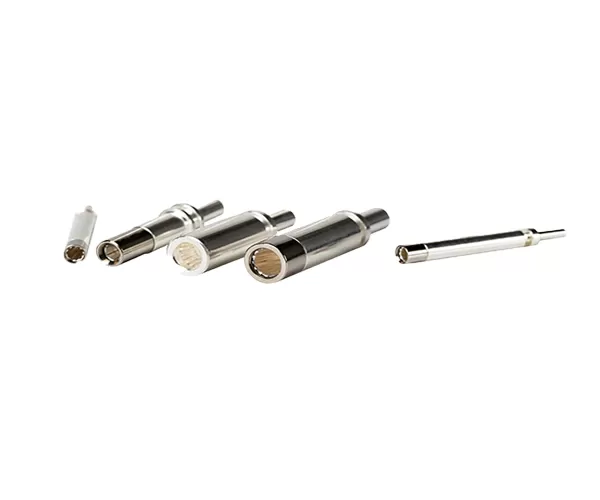
One metal often cannot meet all the mechanical, electrical and cost requirements of a connector. Plating of the terminal allows the manufacturer to use the best metal for the crimp and then cover that metal with a thin layer of another metal. Electroplating is a kind of metal electrode-position process, which refers to the process in which simple metal ions or complex ions are discharged and reduced to metal atoms on the surface of a solid (conductor or semiconductor) by electrochemical methods, and adhere to the electrode surface to obtain a metal layer.
Advantages of Plating: 1. Corrosion Resistance 2. Better Electrical Properties 3. Durability 4. Solderability 5. High Temperature Protection
Plating material advantages:
| Tin Advantages | Gold Advantages | Nickel Advantages | Silver Advantages |
1. Comprehensive, excellent terminal finish | 1. Excellent corrosion resistance | 1. Improve adhesion and solderability | 1. Easy to polish |
2. The most widely used in coating materials | 2. Good ductility, easy polishing, high temperature resistance, and good anti-tarnish performance | 2. Electroplated nickel layer has high stability in air | 2. Strong reflective ability |
3. Low cost | 3. Excellent solderability | 3.A nti-oxidation | 3. Strong chemical stability |
4. Excellent electrical conductivity and solderability | 4. Low contact resistance, good electrical conductivity, easy to weld | 4. Minimize adverse reactions between host metal and coating metal | 4. Good thermal conductivity, electrical conductivity, welding performance |
| 5. Silver-white metal, non-toxic | 5. Certain wear resistance. | 5. Cheaper than gold plating |


 English
 Deutsch
 Español
 italiano
 русский
 português
 Svenska
 العربية
 Nederland
 norsk
norsk français