Sourcing EV charging cables for an OEM project involves more than comparing current ratings and unit prices. The cable assembly must match the vehicle, charging equipment, installation environment, and target market while maintaining consistent performance during repeated charging cycles.
For OEM buyers, the practical starting point is to define the application before requesting quotations. A clear specification makes supplier proposals easier to compare and helps prevent changes later in product development.
An EV charging cable is a cable assembly designed to transfer electrical power between charging equipment and an electric vehicle while maintaining the required electrical and mechanical characteristics.
The initial specification should cover charging type, voltage, current, connector configuration, cable length, conductor construction, insulation, jacket material, and environmental conditions.
| Specification | What to Check | OEM Consideration |
| Charging type | AC or DC | Determines cable and connector configuration |
| Rated voltage | Required system voltage | Must match the charging system |
| Rated current | Continuous charging current | Affects conductor and thermal design |
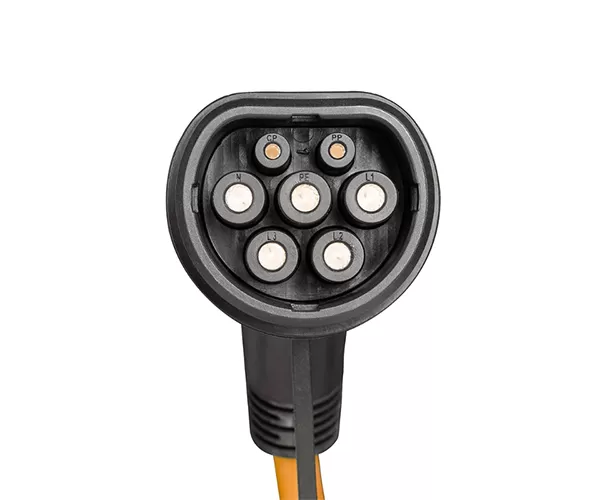
| Connector | Type 1, Type 2, CCS2, etc. | Determines vehicle compatibility |
| Cable length | Required working length | Influences handling and voltage drop |
| Conductor | Material and cross-section | Affects resistance and heating |
| Jacket | Material and protection | Supports mechanical and environmental durability |
| Environment | Temperature, moisture, UV | Determines material selection |
Cable length deserves attention because longer assemblies can increase resistance, weight, and handling requirements. Flexibility is equally important when the cable will be repeatedly bent, coiled, or moved.
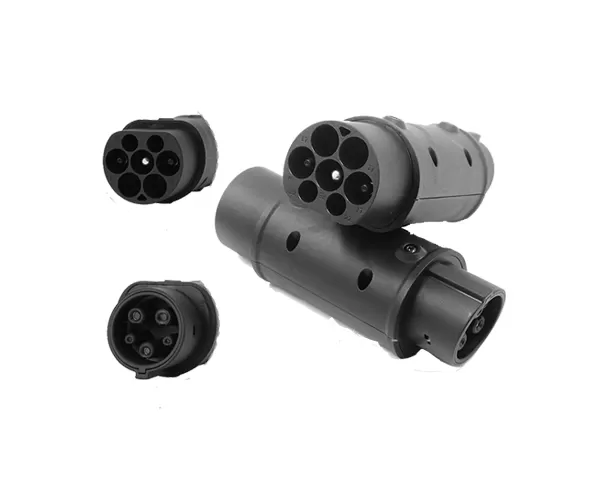
For applications involving different regional charging interfaces, understanding the Type 1 vs Type 2 charging cable distinction can help OEM teams select the appropriate connector configuration for the target market.
Cable performance depends on the complete assembly rather than one specification. Conductors, insulation, terminals, connector contacts, jacket, and strain relief all contribute to electrical and mechanical reliability.
Higher charging currents generally increase thermal requirements because electrical resistance produces heat. Conductor size, cable length, ambient temperature, contact resistance, and charging duration therefore need to be considered together rather than evaluated independently.
Mechanical construction is also important. A cable used in a residential environment may experience very different handling conditions from one integrated into commercial charging equipment or regularly exposed to outdoor environments.
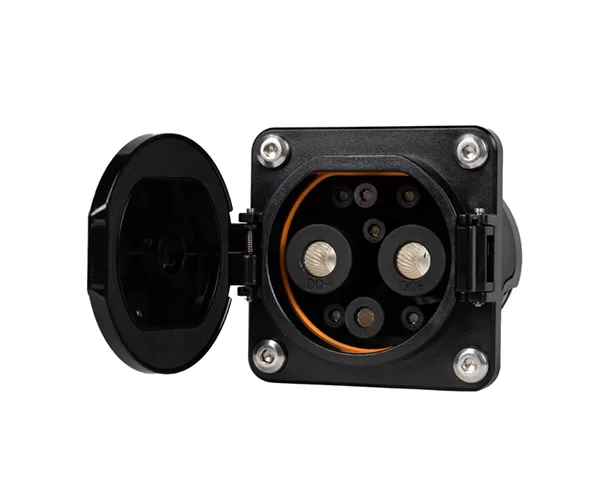
For DC charging projects, OEM teams should evaluate the cable together with the selected CCS2 charging connector to ensure the complete interface meets the intended electrical and mechanical requirements.
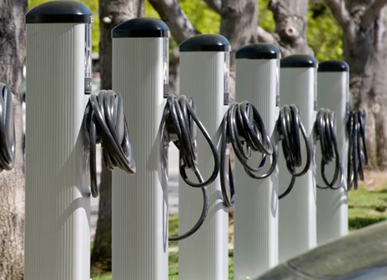
An EV charging cable supplier should be assessed according to both technical capability and production consistency. A supplier may provide an acceptable prototype, but OEM procurement teams also need confidence that the approved design can be reproduced reliably during volume production.
Two areas deserve particular attention:
Technical capability: Review rated voltage and current, conductor construction, contact resistance, flexibility, temperature range, sealing, insulation, strain relief, and applicable test conditions.
Production capability: Check material traceability, incoming inspection, process control, sample development, final inspection, production capacity, and technical documentation.
The supplier should also explain the conditions behind its published ratings. A current rating should not be interpreted as a universal value because actual thermal performance can depend on installation, ambient temperature, cable construction, and charging duration.
Sample approval should therefore use clearly documented specifications. The production sample should contain the same critical materials, connectors, terminals, and manufacturing processes intended for the final product.
Applicable standards depend on the charging architecture and destination market. IEC 62196-2:2025 covers dimensional compatibility requirements for EV plugs, socket-outlets, vehicle connectors, and vehicle inlets using standardized AC pin and contact-tube configurations.
IEC 62196-1:2025 addresses EV plugs, socket-outlets, vehicle connectors, vehicle inlets, and cable assemblies used in conductive charging systems, including both AC and DC applications.
IEC 61851-1 specifies general requirements for conductive charging systems, including operating conditions, EV supply equipment, the connection between the vehicle and charging equipment, and electrical safety.
OEM buyers should ask suppliers to identify the standards applicable to the proposed cable and connector configuration and provide relevant test or compliance documentation.
Customization is common in OEM charging projects. Requirements may include a specific cable length, connector arrangement, overmolding structure, strain relief, labeling, packaging, or installation configuration.
These changes should be discussed before sampling because modifying one component can affect the overall assembly. Increasing cable length, for example, may influence resistance and handling, while changes to connector construction can affect mechanical integration.
For projects using other DC charging interfaces, a CHAdeMO charging cable may be relevant when it matches the vehicle and charging infrastructure requirements.
A capable supplier should distinguish between cosmetic customization and modifications that affect electrical, thermal, mechanical, or safety performance. This distinction helps OEM teams avoid treating every customization as a simple appearance change.
AUPINS works across electrical contact and EV charging applications, providing OEM teams with a practical starting point for evaluating cable and connector requirements.
A project can begin with the charging mode, voltage, current, connector type, cable length, operating environment, and expected production requirements. These parameters provide the basis for configuration selection, sample development, testing, and production discussions.
For OEM buyers, the objective is not simply to obtain a cable that performs during one test. The more important goal is to establish a clearly defined configuration that can be reproduced consistently from prototype to volume production.
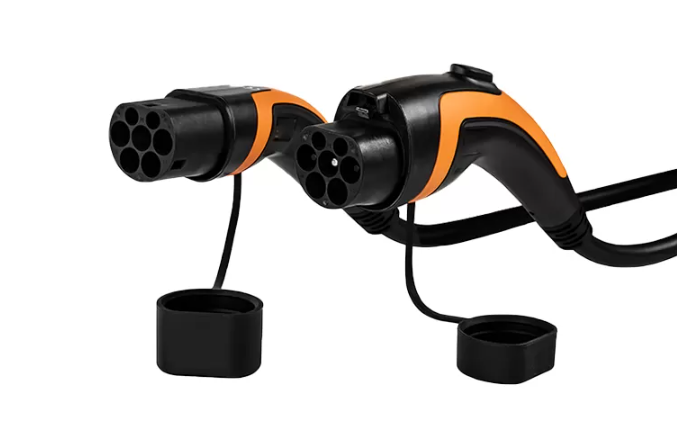
Sourcing EV charging cables for OEM projects requires attention to electrical specifications, connector compatibility, mechanical construction, environmental conditions, applicable standards, customization, and supplier production capability.
Defining requirements before requesting quotations, evaluating complete assemblies rather than isolated components, and verifying production consistency can make the sourcing process more structured and reduce integration issues during product development.
Provide the charging type, voltage, current, connector, cable length, environment, flexibility requirements, target market, and expected production volume.
Yes. Depending on the supplier, cable length, connector configuration, overmolding, strain relief, labeling, and packaging can be customized.
The current rating should match the charging system while considering conductor size, cable length, ambient temperature, contact resistance, and charging duration.
They use different connector configurations and are associated with different vehicle and market requirements. OEM selection should follow the intended vehicle and charging infrastructure.
Repeated bending and coiling can create mechanical stress. Appropriate flexibility and strain relief can therefore contribute to long-term cable durability.
Request technical drawings, specifications, material information, test reports, applicable compliance documentation, sample details, and production quality-control information.
 English
 Deutsch
 Español
 italiano
 русский
 português
 Svenska
 العربية
 Nederland
 norsk
norsk français