-
- En
-
-

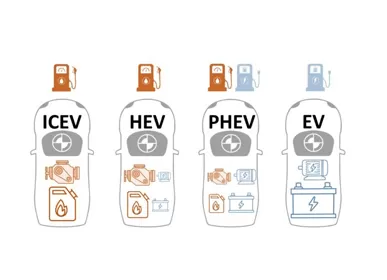
Will electric vehicles eventually “replace” gasoline vehicles? Or will gasoline vehicles stage a strong comeback?The most realistic answer is: neither side will achieve absolute dominance. The future automotive landscape will be a long-term, diversified ecosystem where multiple powertrains coexist and develop together.
In urban commuting, fixed daily mileage, and home-charging environments, EVs will keep strengthening their advantages in low running costs and quiet driving experience. By 2030, global EV sales are projected to account for 40%–50% of total passenger car sales.
Gasoline vehicles (including those using synthetic fuels) will retain stable market share in regions with insufficient charging infrastructure, cold climates, heavy-duty towing applications, and enthusiast markets driven by engine sound and modification culture—though their overall proportion will gradually decline.
Plug-in Hybrid Electric Vehicles (PHEVs) and extended-range EVs have become the preferred choice for consumers hesitant to switch to pure electric power. They deliver low-cost electric daily commuting while completely eliminating range anxiety. In 2026, the growth rate of PHEV sales has overtaken that of pure EVs, proving that transitional technologies have stronger vitality than widely predicted.
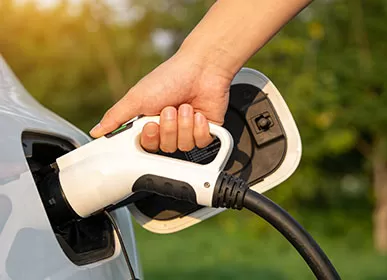
Regardless of technological evolution, charging convenience remains the most critical factor influencing EV adoption. Public charging station density, charging speed, and cross-platform payment interoperability directly shape consumer confidence. In this system, Electric Vehicle Supply Equipment (EVSE) plays an irreplaceable core role.
As a leading EVSE Manufacturer based in China, AUPINS is committed to providing One-Stop Electric Vehicle Charging Solutions – from highly reliable and intelligently connected hardware to seamless deployment support – for global households, fleet operators, and public charging networks. Our product portfolio ranges from 7kW AC home chargers to 240kW DC fast-charging modules, covering residential communities, commercial parking lots, and highway service areas. In the era of multi-power coexistence, AUPINS believes that high-quality EVSE is not just a supporter of a single technical route, but the essential infrastructure that empowers all electrified mobility choices – including BEVs, PHEVs, and FCEVs.
Returning to the question: gasoline vehicles vs. electric vehicles—who will win?The answer is: the industry will not move toward a “zero-sum game.” The future automotive market is like a tropical rainforest:Pure EVs are fast-growing broad-leaved trees that thrive in sunny urban areas;Gasoline vehicles are drought-tolerant shrubs rooted in infrastructure-weak regions;Hybrids are flexible vines that connect the two ecosystems efficiently.
For consumers, policymakers, and industry participants, the focus should shift from “who replaces whom” to “how to maximize the value of each powertrain in its optimal scenario.”Along this transformation journey, EVSE manufacturers like AUPINS are quietly laying every reliable cable and building every stable charging point. Because no matter how power forms evolve, convenient, safe, and stable energy supply will always be the cornerstone of future mobility.
p r e v
n e x t